

Looking at the results from the first five months of 2026, it can be said that Vietnam’s tourism industry has moved beyond a period of simple recovery and entered a phase of more substantial growth. What is particularly noteworthy is not only the strong increase in international arrivals but also the simultaneous improvement in key hotel performance indicators, including occupancy, average daily rate, room revenue and overall accommodation demand.
According to the CoStar Hospitality National Report Vietnam, updated on July 2, 2026, Vietnam’s hotel market recorded a YTD occupancy rate of 63.9%, an ADR of USD 124.02 and RevPAR of USD 79.21. This represents a highly significant recovery compared with 2025, when full-year occupancy reached 58.4%, ADR stood at USD 110.57 and RevPAR reached USD 64.54. In other words, within the first five months alone, the hotel market significantly exceeded the previous year’s averages across all three key pillars: room occupancy, room rates and room revenue.
More importantly, this growth has not been driven by a rapid increase in supply but primarily by genuine market demand. The CoStar report shows that during YTD 2026, the market’s total available room supply increased by 2.8%, while total room demand rose by 14.1%. In other words, accommodation demand grew several times faster than the rate of supply growth. This is a highly important signal, demonstrating that the industry’s recovery is no longer reflected only in visitor arrival numbers but has translated directly into hotel business performance.
When viewed alongside data from the Vietnam National Authority of Tourism, the picture becomes even clearer. During the first five months of 2026, Vietnam welcomed 10.6 million international visitors, an increase of 14.9% year on year and the highest figure ever recorded for the first five months of a year. This growth rate closely corresponds with the 14.1% increase in hotel room demand reported by CoStar. It demonstrates that the growth in international arrivals has successfully translated into actual accommodation demand, rather than merely representing border entries or short-stay visitors.
This marks a significant difference from the recovery period between 2022 and 2024. At that time, although visitors were returning to many destinations, room rates had not fully recovered, occupancy remained unstable and businesses continued to rely heavily on promotions to stimulate demand. By 2026, the market has begun to show stronger fundamentals, with occupancy, ADR and RevPAR rising simultaneously. The 24.2% increase in YTD RevPAR is the clearest indicator that room revenue per available room is recovering not only because of higher occupancy but also because hotels are achieving stronger room rates.
Premium segments are leading the recovery
One of the most important conclusions from the CoStar report is that the growth of Vietnam’s hotel market is currently being driven by the Luxury & Upper Upscale and Upscale & Upper Midscale segments.
The Luxury & Upper Upscale segment recorded YTD occupancy of 66.6%, an ADR of USD 162.41 and RevPAR of USD 108.12, with RevPAR increasing by 25.7%. This segment is benefiting the most from the recovery of international visitors, high-end leisure travellers, MICE guests, affluent families, golf and wellness travellers, as well as guests combining business with leisure.
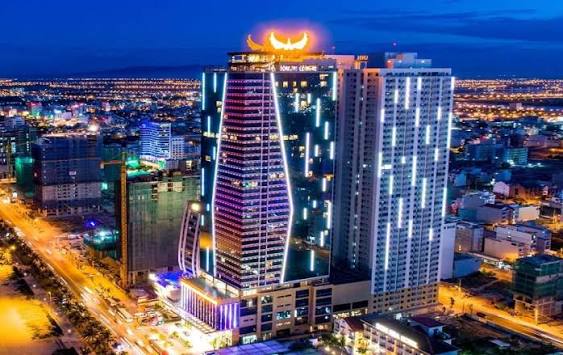
Competition in Vietnam’s luxury hotel market is becoming increasingly intense
The Upscale & Upper Midscale segment also recorded strong growth, with YTD occupancy of 63.8%, an ADR of USD 82.64 and RevPAR of USD 52.68, while RevPAR increased by 28.9%. This indicates that the upper-middle-income customer segment is expanding, not only in major cities but also across coastal destinations, tourism cities, convention hubs and markets with strong air connectivity.
In contrast, the Midscale & Economy segment is experiencing greater challenges. Although ADR increased by 14.9%, YTD occupancy reached only 44.3%, representing a decline of 7.1%. This reflects an important reality: the current tourism recovery is not benefiting all market segments equally. Budget and midscale hotels may be under pressure from price competition, homestays, serviced apartments, alternative accommodation, rising operating costs and a shift among domestic travellers towards more flexible accommodation options.
This leads to an important observation: Vietnam’s tourism recovery in 2026 is increasingly driven by quality rather than volume compared with previous periods. Premium and upper-midscale hotels have been able to raise their rates, maintain occupancy and improve RevPAR. However, this also creates greater expectations regarding service quality, human resources, guest experiences and brand management. As room rates increase, guest expectations rise accordingly. If service quality does not match the price paid, the market may face the risk of lower online review scores and a loss of competitive advantage.
The southern market is achieving stronger performance, while Central and Northern Vietnam account for the majority of supply
The CoStar report divides Vietnam’s market into two major regions: Vietnam Central & North and Vietnam South. Vietnam Central & North accounts for 69.1% of the total hotel rooms included in the report’s sample, with 135,526 rooms, while Vietnam South represents 30.9%, with 60,698 rooms.
However, in terms of operating performance, Vietnam South is recording stronger results. The region achieved 12-month occupancy of 64.4%, an ADR of USD 124.04 and RevPAR of USD 79.86. Meanwhile, Vietnam Central & North recorded occupancy of 58.8%, an ADR of USD 111.10 and RevPAR of USD 65.29. This suggests that southern Vietnam, particularly Ho Chi Minh City and its surrounding markets with strong urban, commercial, MICE and business travel activity, is generating higher room revenue performance.
 The southern market is experiencing stronger growth
For Central and Northern Vietnam, the issue is not a shortage of accommodation supply but how to improve operating efficiency across an already substantial room inventory. The region currently has 27,028 rooms under construction, considerably higher than the 11,326 rooms being developed in southern Vietnam. If demand continues to rise, this will become an advantage. However, if international arrivals slow, air connectivity remains insufficient or tourism products lack diversity, localised oversupply pressures may emerge.
This is particularly important for coastal destinations such as Da Nang, Nha Trang, Phu Quoc, Ha Long and Hoi An, as well as emerging tourism markets. Many destinations already have extensive networks of hotels, resorts, condotels and villas. However, revenue growth depends not only on the number of available rooms but also on the destination’s ability to generate demand through air routes, events, MICE activities, festivals, nighttime products, shopping, cuisine, cultural experiences, wellness, golf, destination weddings and film tourism.
International visitor growth has clearly supported the hotel market
During the first five months of 2026, Vietnam welcomed 10.6 million international visitors, an increase of 14.9%. This figure closely corresponds with the 14.1% increase in hotel room demand reported by CoStar. This correlation is particularly important because it demonstrates that international visitors are not merely contributing to statistical arrival figures but are generating genuine accommodation demand, expenditure and revenue for the hotel industry.
In the first quarter of 2026, Vietnam recorded 6.76 million international visitors, 37 million domestic travellers and approximately VND 267 trillion in total tourism revenue. These results provided a strong foundation for the first five months of the year. If this momentum is maintained, the target of welcoming 25 million international visitors in 2026 is achievable. However, the industry must remain cautious because the first five months generally include the international peak season, the Lunar New Year holiday and other periods with favourable travel demand.
It is also important to recognise that growth in international arrivals does not mean every destination will experience the same level of growth. Localities with strong air connectivity, clear destination branding, diverse tourism products and effective digital promotion capabilities will benefit the most. Destinations that depend excessively on one or two source markets will remain vulnerable when conditions in those markets change.
This lesson is particularly relevant to destinations that have previously depended heavily on South Korean or Chinese visitors. When the South Korean market shows signs of slowing at certain destinations, or when the Chinese market does not recover as strongly as expected, hotel occupancy and room rates may come under pressure. Therefore, growth in 2026 must be accompanied by the restructuring and diversification of source markets.
Tourism promotion in 2026: collaboration is the right direction, but it must be more closely connected with digital transformation and tourism products
The results from the first five months of the year did not happen automatically. Since the beginning of 2026, Vietnam’s tourism industry has implemented numerous promotional, marketing and market repositioning activities. The 2026 tourism promotion programme was developed under the spirit of “Synergy – Breakthrough”, in which the national tourism industry conducts overseas promotional activities, local authorities participate according to priority markets and businesses and economic groups work together to support the programme.
This represents a positive shift. In the past, tourism promotion was sometimes fragmented, with each locality pursuing its own approach and businesses operating independently according to their own resources, without a consistent national message. The new approach helps reduce duplication, strengthens recognition of the Vietnam tourism brand and improves coordination between central authorities, local governments, airlines, hotels, travel companies and tourism groups.

Hotels should accelerate digital transformation
From the beginning of the year through May, Vietnam participated in promotional activities across ASEAN, China and other nearby markets. This is a reasonable strategy because short-haul markets benefit from shorter flight times, lower travel costs, faster recovery potential and suitability for leisure travellers, MICE visitors and weekend travellers. Activities such as ATF, TRAVEX, GITF Guangzhou, ITB China, ITE Hong Kong and MICE promotion programmes in Taiwan demonstrate that the industry is focusing on markets with strong potential to convert promotional efforts into actual visitor arrivals.
However, as the number of FIT travellers, independent travellers and visitors using AI to plan their trips continues to increase rapidly, tourism promotion cannot rely solely on trade fairs, roadshows and familiarisation trips. The industry needs to invest more heavily in its digital presence, destination data, multilingual content, short-form videos, online reviews, experience maps, direct booking solutions and tourism e-commerce.
Without stronger performance in these areas, Vietnam may conduct numerous promotional activities without achieving high conversion rates. Today, travellers do not simply listen to presentations at tourism fairs. Before making a decision, they research destinations through Google, TikTok, Instagram, YouTube, OTAs, Naver, Xiaohongshu, TripAdvisor and AI-powered tools. Destinations with accurate data, compelling images, positive reviews and convenient booking processes will have the competitive advantage.
The recovery is creating opportunities while also increasing the risk of oversupply
One indicator requiring particular attention in the CoStar report is the number of hotel rooms currently under construction. Vietnam’s hotel market currently includes 196,224 rooms within the report’s tracking sample, with an additional 38,354 rooms under construction. Of these, the Luxury & Upper Upscale segment accounts for 15,586 rooms under construction, while the Upscale & Upper Midscale segment accounts for 20,420 rooms.
This means that most of the new development pipeline is concentrated in the premium and upper-midscale segments. This reflects continued strong investor confidence in Vietnam’s tourism industry. At the same time, however, it will create pressure during the 2026–2028 period. If international and domestic demand continues to grow, the new supply will help Vietnam expand its visitor capacity. However, if visitor growth slows or destination products fail to develop accordingly, many markets may face intense price competition.
This is especially important for localities developing large numbers of hotels, resorts, holiday apartments and integrated tourism complexes. The key question is no longer “How many rooms are available?” but rather “How many reasons do travellers have to visit, stay longer, spend more and return?” A new hotel cannot independently create demand if the destination lacks air routes, events, nighttime experiences, cultural products and a comprehensive service ecosystem.
Hotel profitability is improving, but operating costs remain a major pressure
The CoStar report also provides profitability data for full-service hotels in 2024. Total revenue per room reached USD 65,920, an increase of 22.9%; GOP reached USD 25,824 per room, an increase of 34.9%; and EBITDA reached USD 22,822 per room, an increase of 35.5%. These figures demonstrate that as revenue recovers, hotel profitability can also improve rapidly.
However, operating costs remain an area requiring careful control. Labour costs accounted for 24.3% of total revenue. Utility expenses increased significantly, rising by 38.2% per room. Sales & Marketing expenses also increased by 16.7%, reflecting the higher spending required for businesses to secure market share, promote their brands, maintain distribution channels and compete in the digital environment.

Costs are an inevitable part of the tourism and hospitality industry’s development
This shows that during the new growth phase, hotels must not only increase revenue but also improve productivity. If ADR rises while energy, labour, marketing, OTA commission and maintenance costs increase even faster, actual profits may be eroded. Sustainable recovery therefore requires effective revenue management, cost management, digital transformation and higher labour productivity.
Overall assessment: the first five months were highly positive, but there is no room for complacency
Based on the consistent data from the Vietnam National Authority of Tourism and the CoStar report, five key conclusions can be drawn.
First, growth in international visitors has translated relatively effectively into accommodation demand. The 14.9% increase in international arrivals during the first five months closely corresponds with the 14.1% increase in YTD hotel room demand.
Second, the hotel market has experienced growth not only in occupancy but also in room rates. YTD ADR increased by 11.9%, while RevPAR increased by 24.2%, demonstrating that businesses are successfully restoring room rates rather than relying solely on discounts to fill rooms.
Third, the premium and upper-midscale segments are leading the recovery. This is a positive signal for Vietnam’s strategy of improving tourism quality, but it also requires higher service standards.
Fourth, the risk of oversupply is becoming increasingly visible. With more than 38,000 rooms under construction, destinations must accelerate the development of source markets, air routes, tourism products and events to absorb the new supply.
Fifth, tourism promotion is moving in the right direction through stronger collaboration, but it must be upgraded through digital promotion, product-based promotion and customer-segment-based promotion. Vietnam can no longer rely on the general message that “Vietnam is beautiful”. Instead, it must clearly communicate the specific reasons to visit Vietnam, including beach holidays, cuisine, culture, MICE, golf, wellness, destination weddings, film tourism, halal tourism, shopping and the nighttime economy.
Recommendations for the remainder of 2026
To maintain growth momentum and avoid risks following the peak season, Vietnam’s tourism industry should focus on several major priorities.
First, the industry should continue diversifying its international source markets. South Korea and China remain highly important, but Vietnam needs to increase the proportion of visitors from India, Taiwan, Southeast Asia, Australia, Europe, the Middle East and Muslim-majority markets. The objective is not only to offset declines when one market weakens but also to establish a more balanced visitor structure.
Second, Vietnam should accelerate the development of MICE tourism, events, festivals and the nighttime economy. Hotel performance indicators show that when demand is strong, the market can increase both occupancy and room rates. Localities should therefore create more reasons for visitors to travel outside peak periods, particularly through international events, conferences, sporting events, music, cinema, cuisine and cultural programmes.
Third, the development of accommodation supply must be carefully controlled. Hotels should not continue to be developed solely according to a real-estate investment model. Every new accommodation project should be connected with market demand, air connectivity, tourism products, human resources and its ability to generate long-term revenue.
Fourth, service quality must be upgraded. If Vietnam aims to increase ADR and attract high-spending visitors, average service quality will no longer be acceptable. Human resources, foreign-language proficiency, training, operating standards, hygiene, safety, cuisine, local experiences and review management must all be treated as priorities.
Fifth, digital capabilities must be developed across the entire industry. Direct booking, CRM, customer data management, multilingual content, tourism e-commerce, AI concierge services and online reputation management will determine the competitiveness of destinations and hotels in the coming period.
Conclusion
The first five months of 2026 represented a highly positive period for Vietnam’s tourism industry. International arrivals increased strongly and reached the highest level ever recorded for the same period. The hotel market improved significantly in terms of occupancy, room rates and RevPAR, while room demand grew faster than supply and the premium and upper-midscale segments recorded a strong recovery.
However, these positive indicators also create new requirements. Vietnam cannot remain satisfied with simply “welcoming more visitors”. The next objective must be to “welcome higher-value visitors who stay longer, spend more and return more frequently”. The tourism industry has recovered, but to achieve a genuine breakthrough, it must shift from volume-based growth to quality-based growth, from destination promotion to product promotion, from selling rooms to selling experiences and from exploiting natural resources to building long-term competitiveness.
If Vietnam succeeds in making this transition, the target of welcoming 25 million international visitors in 2026 will represent more than a statistical milestone. It will demonstrate that Vietnam’s tourism industry has entered a new development cycle that is more professional, more valuable and more sustainable.
(Source: Mr. Nguyễn Đức Quỳnh – Vice Chairman of the Vietnam Hotel Association)
______o0o______
𝐀𝐫𝐢𝐲𝐚𝐧𝐚 𝐂𝐨𝐧𝐯𝐞𝐧𝐭𝐢𝐨𝐧 𝐂𝐞𝐧𝐭𝐫𝐞 𝐃𝐚𝐧𝐚𝐧𝐠 – Vietnam’s Leading Events Destination
Zalo: https://bit.ly/Ariyana_Zalo_Official_Account
𝐀: 107 Vo Nguyen Giap, Ngu Hanh Son Ward, Danang.
𝐓: (+84)236 651 8888
𝐄: events@ariyanacentre.com
𝐖: www.ariyanacentre.com
#AriyanaConventionCentre #Ariyana #MICE #Ariyanadanang #Ariyana #enjoydanang #MICE #MICEExpo #virtualtour #360ACC #360tour #OnetouchtoAriyana #workinganniversary#bestplacetowork