
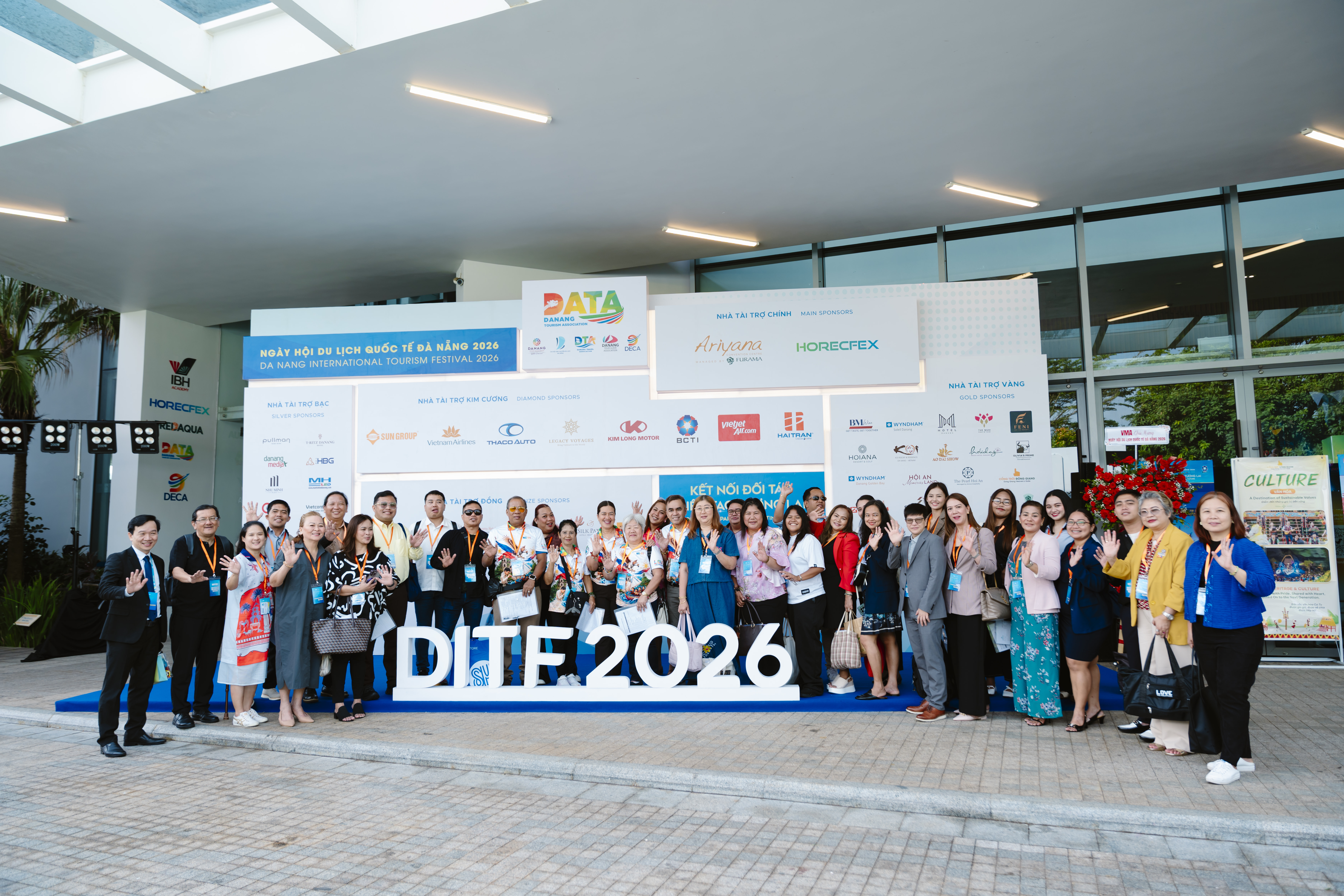
South Korea, Japan, China, India, and Southeast Asian countries are contributing to the increasingly diverse picture of the international tourist market in Da Nang. However, each market has its own characteristics in terms of needs, consumer behavior, and experiential expectations. At the Da Nang International Tourism Fair 2026 (DITF 2026), understanding these differences is seen as the key for businesses to develop suitable products, expand cooperative relations, and enhance the competitiveness of the destination.
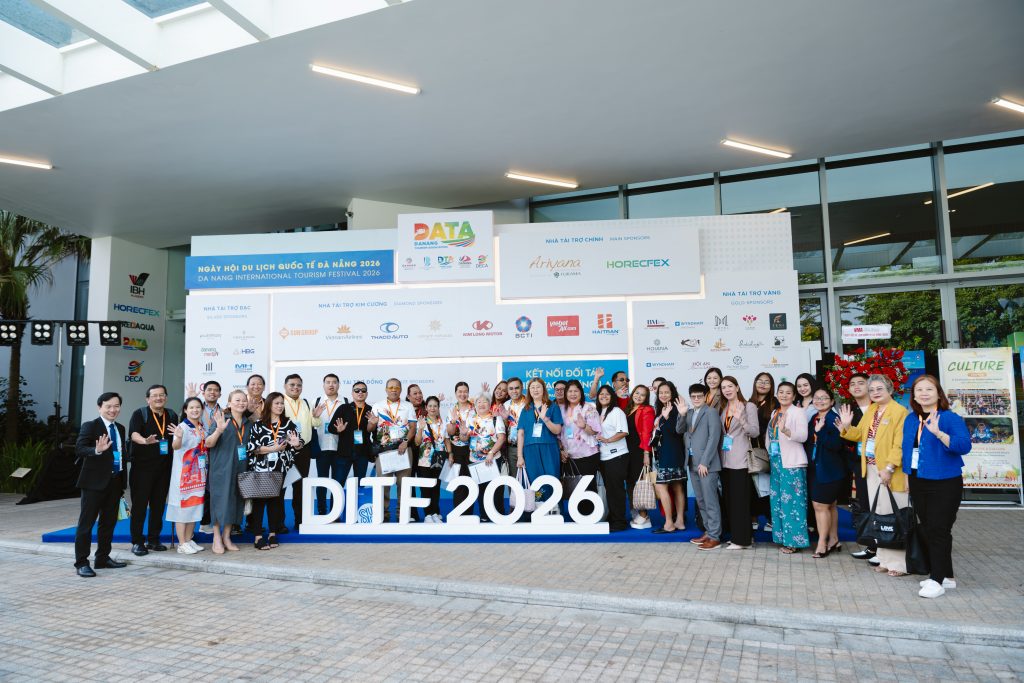
DITF 2026 acts as a strategic bridge, gathering and connecting the tourism business community from international markets.
From market expansion to understanding tourist needs
The development of international tourism is reflected not only in the number of visitors to a destination but also in the ability to attract tourist groups with diverse needs and spending levels.
For Da Nang, the presence of various international tourist markets is opening up opportunities to develop specialized types of tourism, from beach resorts, golf, and healthcare to family travel, weddings, and international conferences.
According to Da Nang tourism industry data published in the first six months of 2026, South Korea accounted for 20.55% of the total international visitors to the city, followed by China with 8.6%, India with 6.68%, and Japan with 3.66%. Southeast Asian markets such as Thailand and the Philippines also contributed significantly to the international visitor structure.
These numbers indicate the potential for market development while simultaneously posing an increasingly clear requirement for businesses: a single product or approach cannot be used for all guest groups.
This is also one of the practical contents at the Da Nang International Tourism Fair 2026 (Danang International Tourism Festival – DITF 2026), taking place from October 16 to 19, 2026, at the Cung Hội nghị Quốc tế Ariyana Đà Nẵng.
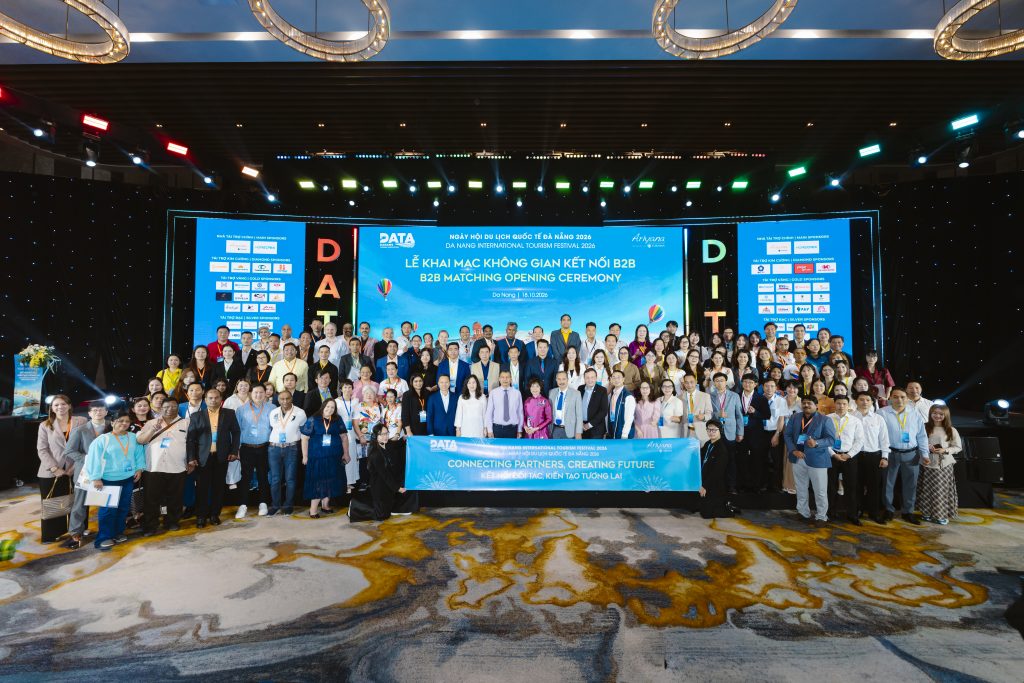
DITF 2026 is an international tourism trade event, creating conditions for domestic businesses to directly meet travel companies and product distribution partners from multiple markets.
Organized by the Da Nang Tourism Association in collaboration with HORECFEX Việt Nam, DITF 2026 is an international tourism trade event, creating conditions for domestic businesses to directly meet travel companies and product distribution partners from multiple markets.
Through business-to-business (B2B) trade meetings, service providers in Da Nang have the opportunity to understand the needs of partners buying international tourism products while introducing programs suitable for each guest group.
Among them, South Korea, Japan, China, India, and countries belonging to the Association of Southeast Asian Nations (ASEAN) are notable market groups, presenting different opportunities for product development.
South Korea: Refreshing experiences to attract returning tourists
South Korea continues to hold an important position in the structure of international visitors to Da Nang. With the advantages of aviation connectivity and destination awareness, the city has become a familiar choice for many South Korean tourists.
However, as a destination becomes increasingly popular, maintaining attractiveness lies not only in the ability to attract first-time visitors but also in creating new reasons for tourists to return.
This is an opportunity for businesses to develop specialized products, rather than focusing solely on traditional beach resorts and sightseeing programs.
Golf tourism is a notable example. With the golf course system in the Central region, Da Nang has the potential to build itineraries combining multiple golf courses, accommodation, transportation, dining, and post-sports healthcare services.
In addition, multi-generational family travel, wellness-combined resorts, and local cultural experience programs can also contribute to enriching choices for South Korean guests.
For travel companies exploiting this market, the concern is not just adding more attractions, but the ability to introduce a newer Da Nang with each trip.
The opportunity for businesses, therefore, lies in innovating experiences so that a familiar destination remains attractive to tourists who have already visited.
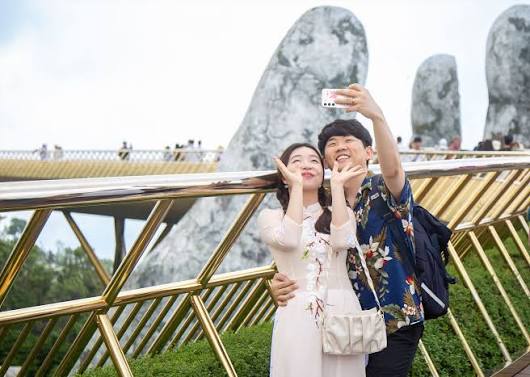
South Korea maintains its key position in the structure of international visitors to Da Nang thanks to convenient transportation and a familiar destination image.
Japan: Service quality and meticulousness create the foundation for long-term cooperation
Unlike markets with a large volume of visitors, Japan presents development opportunities focused on product quality and stability during the service process.
For travel partners specializing in Japanese guests, factors such as clear itineraries, punctuality, hygiene quality, consistent service, and coordination capacity between units are often considered crucial criteria.
This creates an opportunity for Da Nang to develop in-depth resort programs combined with cultural, culinary, heritage, and wellness exploration.
An itinerary connecting Da Nang – Hoi An – Hue, for example, does not necessarily have to take tourists to many locations in a short time. Instead, a reasonable schedule, appropriate experience time, and uniform service quality can generate greater appeal for guest groups that prioritize comfort and meticulousness.
Besides resort tourism, the sector of meetings, incentives, conferences, and exhibitions, collectively known as MICE, also opens up development opportunities in this market.
For corporate guest delegations, organizational capacity, equipment systems, operational processes, and the ability to meet specific requirements can play an important role in the decision to choose a destination.
Therefore, when approaching the Japanese market, businesses must not only introduce attractive products but also prove their ability to maintain stable service quality.
In a market that values reliability, the ability to execute exactly what was committed is the foundation of a long-term cooperative relationship.
China: Diversifying products to meet multiple guest segments
China continues to be one of the notable markets for Da Nang tourism. According to published data, the proportion of Chinese guests in the city’s total international visitors reached 8.6% in the first six months of 2026 and increased to 11.23% in July.
However, a large market size also implies increasingly diverse tourism needs, requiring businesses to have approaches suited to each segment.
Besides traditional sightseeing groups, the market also includes independent travelers, families, groups of young people, or tourists seeking high-quality resort services.
Each guest group may have different priorities regarding price, length of stay, booking methods, and types of experiences.
For group guests, the capacity to serve large numbers, appropriate pricing policies, and convenient itineraries might be considerable factors. Meanwhile, independent tourists often need flexibility in choosing accommodation, dining, entertainment, shopping, and local experiences.
This places a requirement on Da Nang businesses to classify market needs, develop distinct product groups, and select suitable distribution channels.
Instead of merely viewing China as a market with a large volume of visitors, businesses need to dig deeper into each specific guest group that travel partners are serving.
When market demand is analyzed specifically, businesses can turn the advantage of guest volume into an opportunity to develop suitable and higher-value products.
India: Potential from wedding tourism and large-scale events
India is opening up notable opportunities for Da Nang tourism, especially in the field of organizing resort-combined weddings and conference and event tourism.
According to data from the first six months of 2026, Indian guests accounted for 6.68% of total international visitors to the city. Along with that, the development of international wedding events demonstrates the potential to attract guest groups with the need to use multiple services within the same itinerary.
For the type of weddings at a destination, often called a destination wedding, tourists do not just come to attend a ceremony, but also combine it with a vacation, meeting family, and participating in many activities during their stay.
An international wedding program can include multiple ceremonies, banquets, entertainment activities, accommodation services, transportation, and experiences for guests before or after the wedding day.
Therefore, attracting this segment requires close coordination between resorts, event organizers, catering providers, decorators, and related service businesses.
Especially when serving Indian guest delegations, the ability to meet the culinary requirements, cultural customs, and rituals of each family or guest community is a factor that needs careful preparation.
Similarly, for the corporate conference and event tourism sector, partners are not just looking for a venue but also care about the overall service capacity of the destination.
Da Nang thus has the opportunity to leverage the advantages of its hotel system, resorts, convention centers, and support services to attract programs of large scale and high economic value.
For the Indian market, competitiveness lies not only in beautiful landscapes or modern facilities but also in the ability to understand the culture and professionally organize complex experiences.
ASEAN: The advantage of short distance and flexible itineraries
Countries belonging to the Association of Southeast Asian Nations (ASEAN) bring distinct development opportunities thanks to their geographical proximity to Vietnam and the regional aviation connectivity network.
Markets such as Thailand, the Philippines, Singapore, Malaysia, and Indonesia have the potential to develop short holiday programs, weekend getaways, family travel, and conferences combined with sightseeing.
With the advantage of travel time, three-to-four-day itineraries can become a suitable choice for tourists who want to combine resting, exploring, and experiencing multiple services in a relatively short period.
For this segment, businesses need to focus on building programs with reasonable schedules that are easy to choose and flexible in combining activities.
A short vacation in Da Nang can include beach resorts, culinary exploration, shopping, entertainment, and sightseeing in Hoi An without requiring too much travel time.
In addition, corporate incentive travel programs, team-building activities, and family vacations can also be developed to suit the characteristics of each market in the region.
However, ASEAN is not a homogeneous market. Guests from Singapore, Thailand, or Indonesia may have different needs and expectations, requiring businesses to continue studying each specific guest group.
Da Nang’s competitive advantage for nearby markets therefore lies in its ability to combine travel convenience with diverse experiences suitable for short trips.
DITF 2026: Connecting the right market to develop the right product
The differences between international markets show that tourism promotion activities should not stop at introducing destinations, but also need to target the ability to meet the specific needs of each guest group.
A resort can develop golf programs for South Korean guests, family vacations for Southeast Asian tourists, resort-combined wedding services for the Indian market, or wellness and cultural exploration products for suitable partners in Japan.
Using the same facility and service system, the way products are built, priced, and introduced to customers may need adjustments to fit each market.
This is also the value that DITF 2026 aims for through the pre-arranged trade connection mechanism between businesses. Instead of meeting randomly, parties can review profiles, choose suitable partners, and proactively discuss specific cooperation needs.
Through the network of travel associations and international partners, the program creates conditions for Da Nang businesses to access units capable of bringing guests from many different markets.
More importantly, the meetings also open up opportunities for businesses to listen to direct feedback, and clearly understand the requirements regarding quality, pricing policies, services, and product trends of each market.
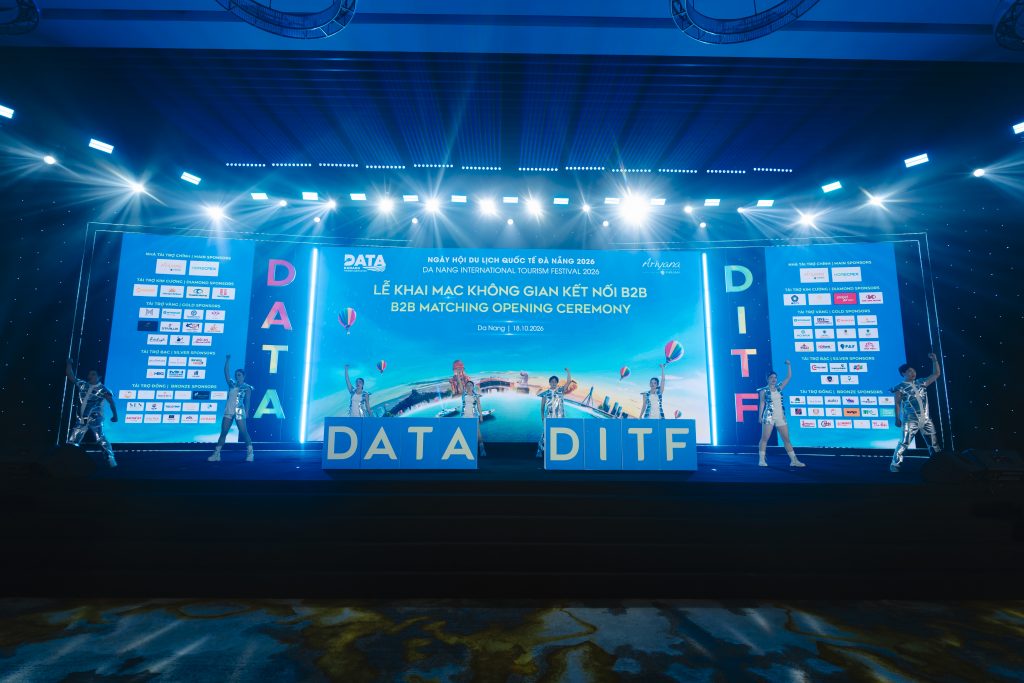
With the message “Connecting Partners, Creating Future”, DITF 2026 not only creates an international trading space but also promotes a deeper approach in tourism development: using market demand as the basis for product innovation and destination quality improvement.
Because in a context where tourists have increasingly more choices, competitive advantage comes not only from what a destination possesses but also from the ability to turn those advantages into experiences tailored to each guest group.
Understanding the market clearly is the first step to reaching customers. But it is the ability to translate that understanding into quality products, suitable services, and long-term partnerships that ultimately determines the competitiveness of Da Nang tourism in the international market.