
Alongside the growth of MICE tourism (Meetings, Incentives, Conferences, and Exhibitions), expectations for an event today go beyond scale, service quality, or attendee experience. Factors related to the environment, social responsibility, and resource efficiency are gradually becoming an integral part of the planning and venue selection process.
In Vietnam, as businesses increasingly prioritize sustainability strategies and brand image, organizing responsible events is also gaining significant attention. So what is a sustainable event, what are the key criteria, and how should organizers prepare to meet this trend?

WHAT IS A SUSTAINABLE EVENT?
A Sustainable Event is a way of organizing events that considers and minimizes negative environmental impacts while generating positive economic and social value. This approach is applied across diverse formats, from conferences, exhibitions, and specialized seminars to corporate events, incentive programs, and international exchanges.
Rather than focusing solely on the duration of the program, sustainability is evaluated throughout the entire event lifecycle: from venue selection, design, procurement, transport, and operations to post-event material disposal.
A sustainable event does not necessarily have to eliminate all environmental impacts completely. What matters is that organizers identify significant impacts, establish appropriate mitigation measures, and evaluate effectiveness based on specific criteria.
5 CRITERIA FOR ORGANIZING SUSTAINABLE EVENTS IN THE MICE INDUSTRY
1. Selecting a Suitable Venue and Facilities
The venue is one of the factors that directly affects energy consumption, transport requirements, and resource usage during an event. A convention center featuring multiple functional spaces, synchronized technical systems, and the capability to host diverse programs helps organizers optimize layouts and operations.
Beyond meeting room capacity, factors to consider include lighting systems, air conditioning, energy-saving equipment, water management, and waste sorting procedures. Geographical location is also crucial: a venue conveniently connected to hotels, airports, and essential services helps reduce the need for transit between multiple properties.
2. Minimizing Waste and Single-Use Materials
Conferences and exhibitions typically generate substantial materials during organization, such as backdrops, directional signage, printed handouts, name badges, food packaging, and promotional items. Without a proper usage plan, many items are used only briefly before becoming waste.
One effective approach is prioritizing reusable materials, designing decorative elements with modular structures, and reducing unnecessary printing. Organizers can also utilize QR codes for program schedules, event maps, and delegate information.
3. Optimizing Transportation and Attendee Transit Experiences
Transportation is a significant source of environmental impact in MICE events, particularly for programs with delegates traveling from different provinces or countries. Therefore, destination selection and shuttle arrangements must be considered right from the planning stage.
For international programs, providing clear transit information, guidance on public transportation, or encouraging attendees to choose suitable travel options also contributes to improving the overall experience.
4. Prioritizing Responsible Suppliers and Products
Event sustainability depends not only on the venue, but also involves the entire supply chain. From decor vendors, technical equipment, and logistics to food and gift suppliers, every choice influences the overall footprint of the program.
Businesses can prioritize local suppliers whenever they meet quality, timeline, and budget requirements. This approach reduces long-distance transport activities while creating opportunities to connect with the local business community at the destination.
5. Creating Community Value and Measuring Effectiveness
A sustainable event aims not only to reduce environmental impacts, but also to foster social value. Utilizing local services, showcasing indigenous culture, creating opportunities for small businesses to join the supply chain, or organizing community-connecting activities all generate positive benefits for the host destination.
Additionally, measurement is a necessary step to evaluate actual performance. Depending on scale and goals, organizers can track printed material volume, reusable item ratios, sorted waste quantities, electricity and water consumption, or the number of participating local suppliers.
WHAT SHOULD BUSINESSES NOTE WHEN CHOOSING A SUSTAINABLE MICE VENUE?
There is no one-size-fits-all sustainable event model applicable to every program. Depending on scale, nature, and budget, businesses need to define priority criteria and discuss them specifically with the venue right from the site inspection phase.
Key questions to ask include: Does the venue have energy and water management policies? Is there a waste sorting and collection process? Which materials can be reused after the event? Can conferences, accommodation, and dining be integrated within the same complex? Can the operator provide data or reports regarding these initiatives?
Furthermore, businesses should clarify the responsibilities of each party. Solutions such as reducing printing, limiting single-use items, or managing surplus food require close coordination among organizers, the venue, suppliers, and attendees. When agreed upon from the start, sustainability criteria become an organic part of operational workflows rather than mere formalities.
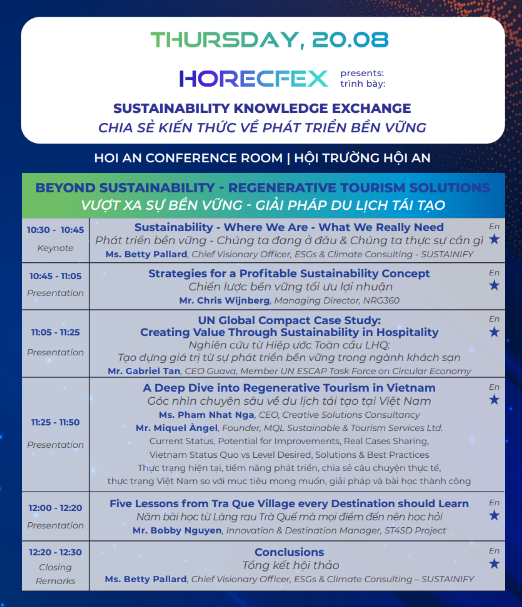
HorecFex 2026 expands the narrative from sustainable development to regenerative tourism, aiming for even more positive values for the destination, community, and ecosystem.
TOWARD SUSTAINABLE MICE EXPERIENCES AT ARIYANA CONVENTION CENTRE DANANG
In Da Nang, Ariyana Convention Centre is one of the venues equipped to seamlessly connect conferences, events, and resort services. Located within the Furama – Ariyana International Tourism Complex, the convention center holds advantages in its coastal location and the ability to integrate accommodation and culinary services within the same area.
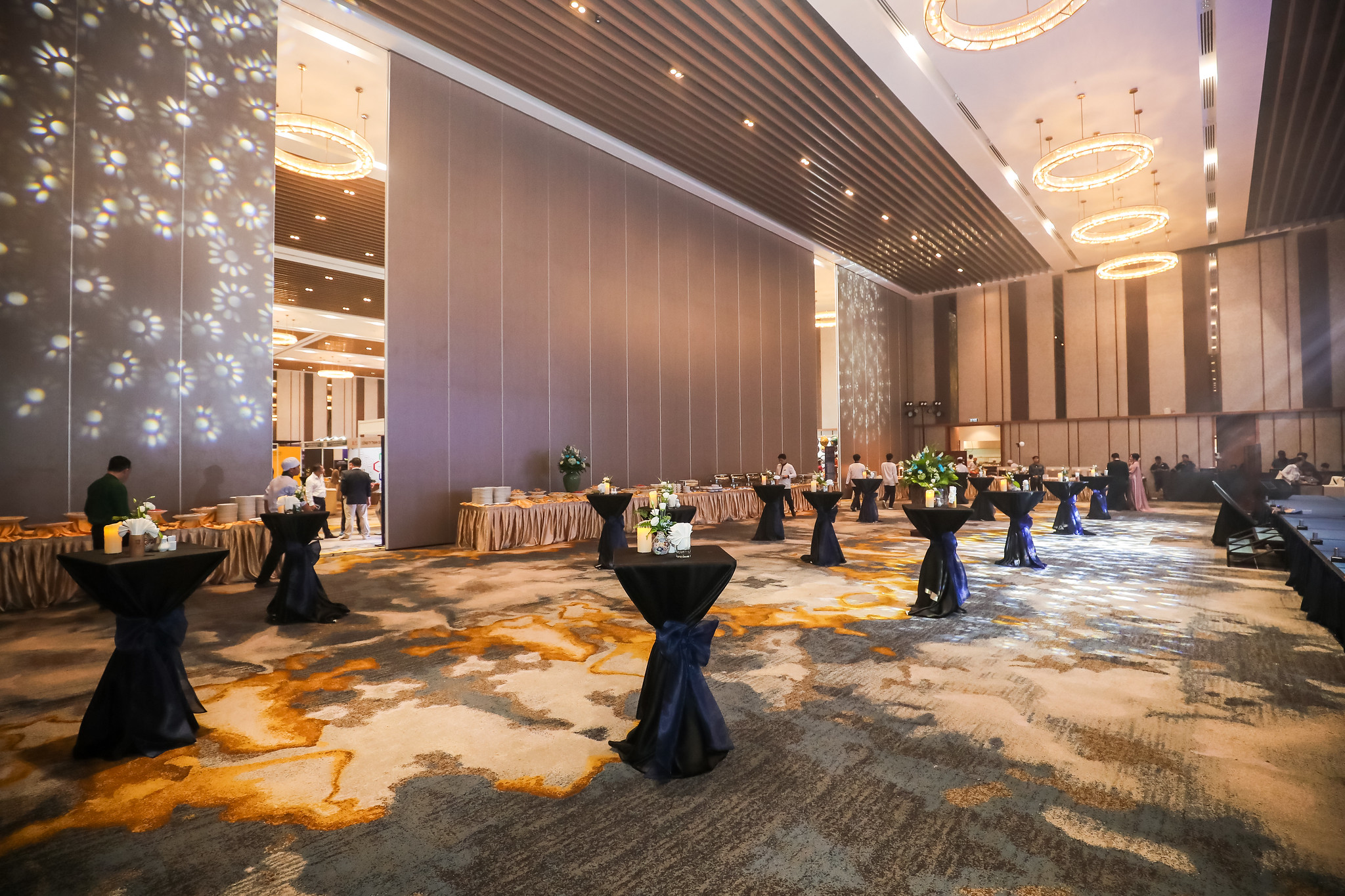
Featuring the 2,079 m² Ariyana Grand Ballroom with a pillarless design and a 9 m ceiling height, alongside a diverse system of functional spaces, the venue accommodates a wide range of MICE formats. Hosting conferences, corporate banquets, or exhibitions within an integrated complex also allows organizers to align accommodation, dining, and transit smoothly with the itinerary.

Ariyana Convention Centre Danang pioneers MICE development in Da Nang with its world-class conference system
Alongside indoor spaces, the Ariyana Beach Garden area offers options for outdoor activities, networking, and seaside gatherings. Programs can be flexibly tailored to specific goals while combining destination experiences with local cultural activities and services.
To move toward a more responsible event, businesses can consult directly with the event management team regarding space layouts, material usage, technical operations, catering services, and supplier coordination. This serves as a solid foundation for building a plan aligned with the sustainability objectives of each program.
In an era where the MICE industry increasingly values experience quality and destination responsibility, choosing the right venue is a vital first step. In Da Nang, Ariyana Convention Centre provides the spaces and service connectivity advantages for businesses to execute effective MICE programs while progressively integrating sustainable event criteria into their operational plans.