
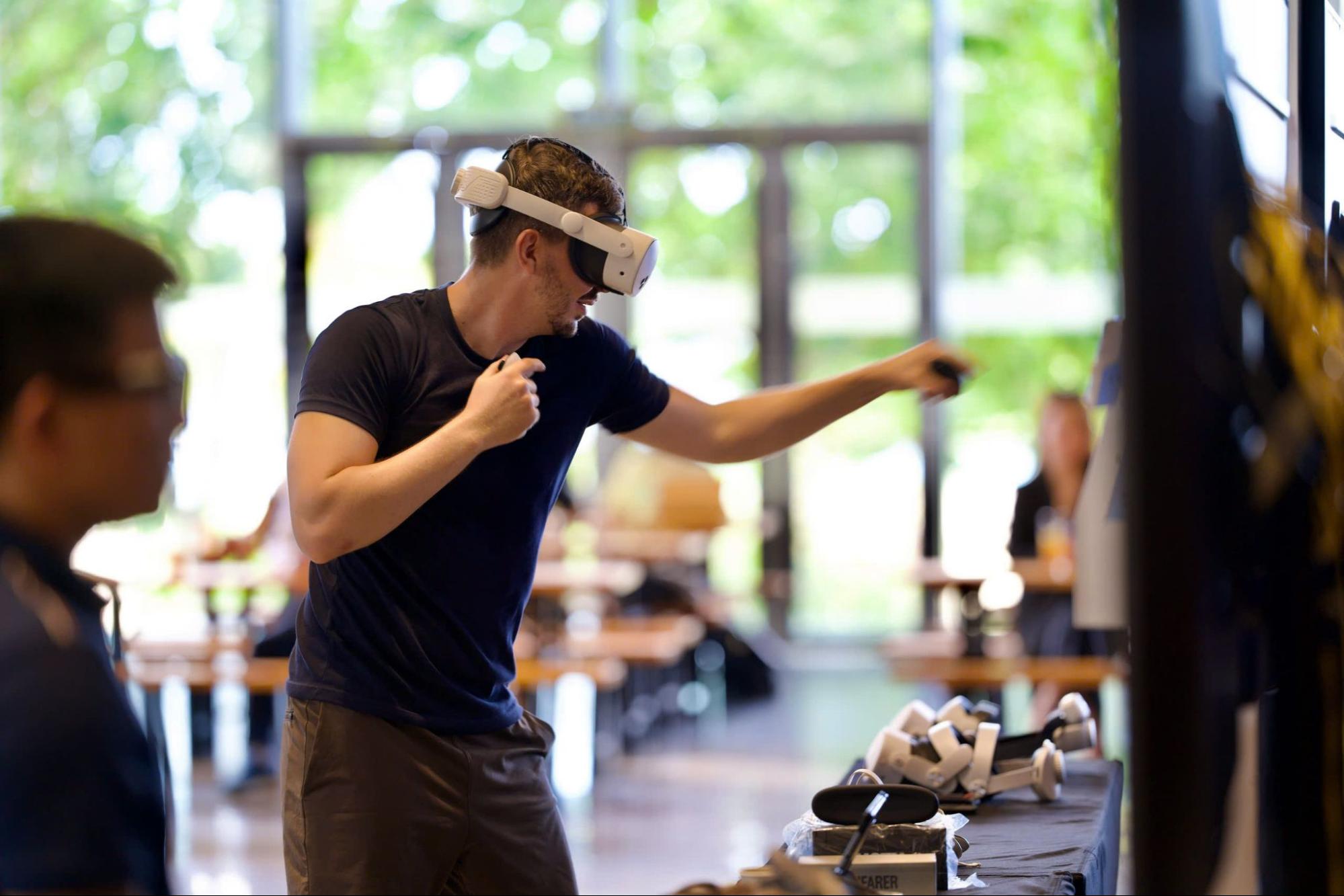
More than VND 42 billion worth of technology equipment was brought to HORECFEX VIETNAM 2025. In the 2026 edition, a single performance combined LED Mapping, Laser, LED Dancing and robot interaction within one integrated scenario. But what stands out is no longer the value of the equipment or the number of technologies on display. After three editions, HORECFEX is showing a clearer shift: from introducing new technologies to placing them directly into experiences that participants can see, step into and experience for themselves.
In 2025, HORECFEX VIETNAM welcomed more than 4,000 participants, over 120 brands and more than 90 speakers. Its technology space featured 4D Immersive Mapping, Hologram & Laser Mapping, 3D virtual reality simulations of hotels and restaurants, service robots, along with various artificial intelligence applications.
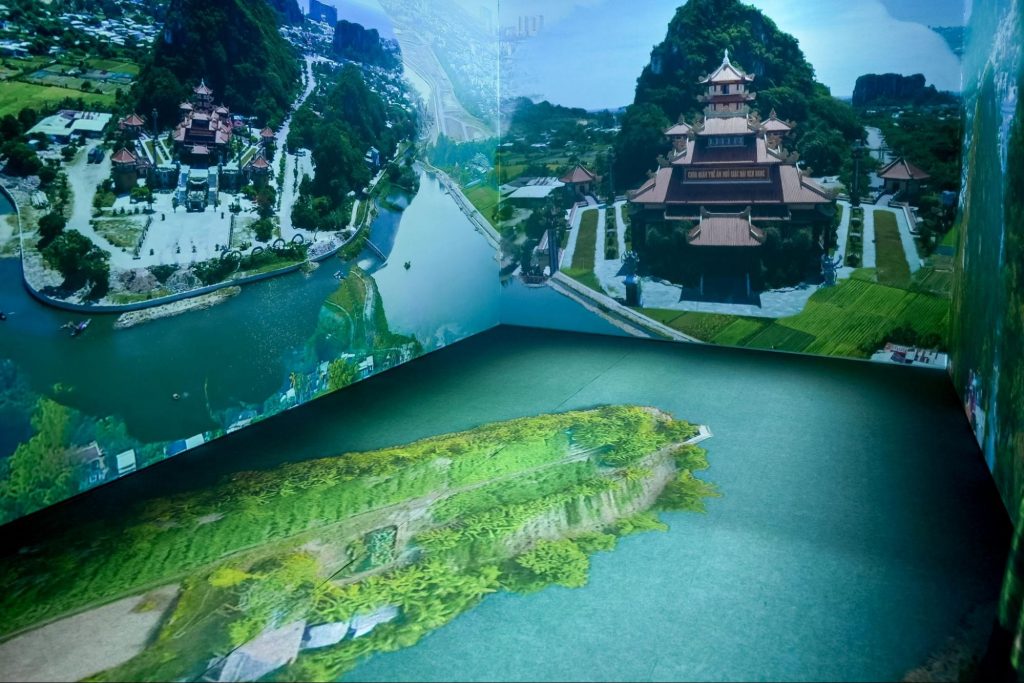
In 2025, HORECFEX VIETNAM brought 4D Immersive Mapping into the experience space, contributing to an edition that brought together more than 4,000 participants and a wide range of new technologies for the HORECA industry.
These experiences partly reflected the direction the event is pursuing: technology is not simply something to be discussed on stage or presented through catalogues, but something that must be seen in action.
In 2026, this approach has been taken one step further.
Instead of allowing each technology to stand on its own, HORECFEX has begun placing multiple layers of technology alongside one another, allowing visuals, lighting, space, human movement and robots to participate in one complete experience.
When Technology No Longer Stands Alone on Stage
One of the highlights prepared for HORECFEX VIETNAM 2026 is a performance lasting approximately 3 minutes and 30 seconds, combining LED Mapping, Laser Mapping, LED Dancing and Robot Interaction.
What is noteworthy is how these four technologies are used.
The performance is not designed as a sequence of technical demos, where each piece of equipment appears in turn to demonstrate its capabilities. Instead, the entire performance is developed into four chapters: Touching Technology, Touching Identity, Touching Future Technology and Connecting the Future.
In the opening chapter, technology opens up the performance space. The next section brings images of the sea, mountains, nature and cuisine into the story, reconnecting it with elements associated with the destination. My Son, the ancient town and Hai Van Gate appear in the transition between heritage and technology. The final chapter brings the story back to HORECFEX and the image of the Dragon Bridge, connecting existing values with a vision of the future.
This approach creates a small but important difference.
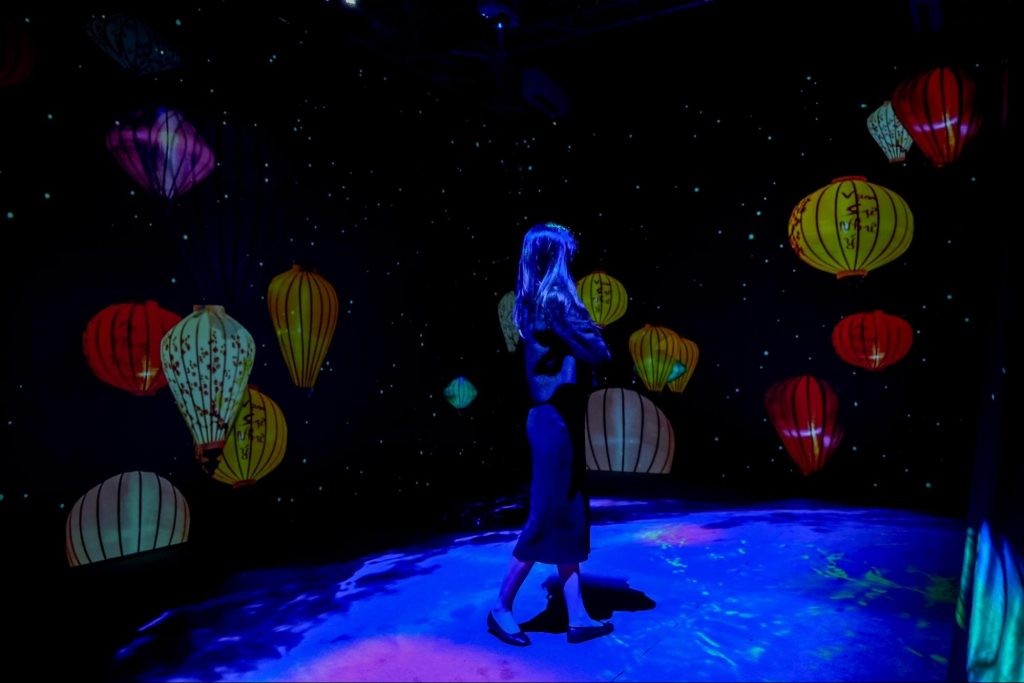
LED Mapping combined with stage movement at HORECFEX VIETNAM 2026 shows how technology no longer stands alone as a demonstration, but becomes part of the event’s visual experience and content.
Viewers do not need to understand how LED Mapping works, what sensors a robot uses or what technical specifications a Laser system has. They experience the result; technology works behind the scenes to make that experience happen.
This is also how technology is increasingly present in hospitality and tourism: guests do not necessarily need to see the system, but they can feel what the system creates.
From Projection Mapping to a Space That Can Tell Multiple Stories
Within this performance ecosystem, Mapping is a technology layer particularly suited to HORECA because it directly transforms something hotels already have in abundance: space.
Unlike projecting images onto a flat screen, Projection Mapping or LED Mapping allows content to be designed around the actual surfaces and structures of the projection area. Architectural lines, depth, volumes and surfaces become part of the visual composition rather than simply serving as a backdrop.
This opens up a way of using space that is quite different from traditional physical decoration.
A ballroom with a fixed architectural structure may need a different appearance for a corporate conference, gala dinner, wedding or year-end celebration. A restaurant may want to transform its atmosphere for a special dining experience. The façade of a resort or an outdoor event area can also become a storytelling surface after dark.
Mapping technology adds a layer of content to these physical assets without necessarily requiring changes to the structure of the building.
In 2025, HORECFEX introduced 4D Immersive Mapping into the participant experience. In 2026, Mapping continues to appear, but no longer stands alone. It is combined with Laser, stage movement and robots, demonstrating a broader approach: technology does not simply transform the visual appearance of a space; it can work alongside multiple other elements to create a complete experiential product.
For MICE, hotels and resorts, this is the part worth observing.
It is not about how beautiful Mapping can be, but how many new ways an existing space can be used when an additional layer of digital content is introduced.
Technology in 2026 Is Moving Beyond the Flat Screen
Projection Mapping is only one part of the broader technology landscape that HORECFEX is presenting this year.
According to the technology direction shared ahead of the event, four areas of development are being highlighted: Agentic AI, spatial computing, smart glasses and Physical AI.
What they have in common is the movement of technology beyond familiar screens.
AI is no longer envisioned simply as a chatbot that waits for a question and provides an answer. With Agentic AI, the focus shifts towards understanding context, coordinating multiple steps and helping people carry out more complex tasks.
Spatial computing brings digital data into the room, conference hall or destination itself rather than limiting it to a screen. Mapping, AR, VR and mixed reality therefore move in the same direction: allowing physical space to become part of the interface.
Smart glasses bring information even closer, directly into the user’s field of vision.
Robots bring artificial intelligence into the physical environment.
Viewed separately, these are very different technology groups. But placed side by side, they reveal a common shift: technology is moving closer to where people actually work, communicate and serve guests.
How Can a Pair of Smart Glasses Change a Conversation?
Rokid smart glasses are a fairly intuitive example.
In the experience scenario developed by HORECFEX, the device is placed in situations involving subtitle display, real-time translation, recording and receiving information directly within the user’s field of vision. Users do not have to repeatedly shift their attention to a phone or another screen to access information.
For hotels, the most straightforward application is multilingual communication.
A front desk employee may interact with multiple groups of international guests during the same shift. A conference may welcome participants from many countries. An employee may need to maintain eye contact while also understanding the information being communicated by a guest.
Smart glasses do not replace an employee’s ability to communicate, but they can provide an additional layer of support between people.
This is also an interesting aspect of HORECFEX’s approach to technology: rather than simply asking “who can this device replace?”, it asks “where can this device help people perform their work better?”
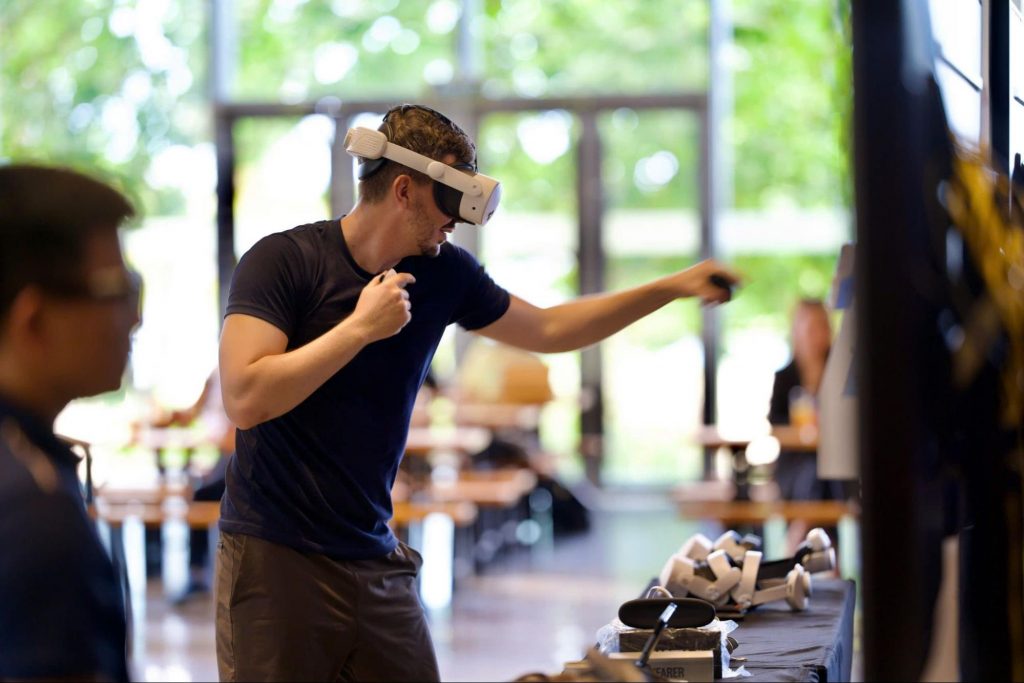
Smart wearable technology at HORECFEX VIETNAM 2026 opens up new ways of interacting with technology, bringing information and digital support closer to users throughout the experience.
Step Into a Villa Before Flying to Danang
If Rokid affects a live, face-to-face conversation, Meta Quest 3 and VR/360 address a different kind of distance: geography.
According to content provided by HORECFEX, virtual reality technology is used to bring viewers into spaces such as guest rooms, villas and conference halls through 360-degree content.
Within MICE and hospitality, the application is quite specific.
An overseas company may want to inspect a ballroom before deciding to organize a conference. A wedding planner may need to visualize how a space can be arranged. A guest considering a villa may want to understand how the different areas of the room are actually connected.
Traditional photos and videos remain important, but viewers are always limited to the camera angle chosen by the person behind the camera.
VR/360 gives them greater freedom to explore.
Technology does not replace an on-site inspection. But it can move customers one step further in the decision-making process before they actually arrive at the destination.
When Robots Start Being Asked About the Job, Not Just Their Performance
Another layer of the HORECFEX 2026 technology landscape is robotics.
Unitree, OrionStar and KEENON are positioned around different operational scenarios, ranging from patrol and safety to reception, guidance and service.
What matters is no longer whether a robot can walk, speak or carry a food tray. These capabilities are becoming increasingly familiar.
The question is shifting towards where they can actually fit into a real operational process.
The four-legged robots from Unitree are introduced into scenarios involving patrol and areas requiring monitoring. OrionStar approaches reception and multilingual communication. KEENON focuses on transportation and service tasks within restaurant environments.
These three technology groups correspond to three very different operational needs.
And this is where a robot only becomes genuinely relevant to a business when it is placed alongside very practical questions: Are the pathways wide enough? How does it perform during peak hours? How do employees coordinate with the robot? How do guests respond? And which tasks genuinely need to be automated?
Hotels do not need robots to prove that they are modern.
They need to know whether a robot can handle a specific task better than the way it is currently being done.
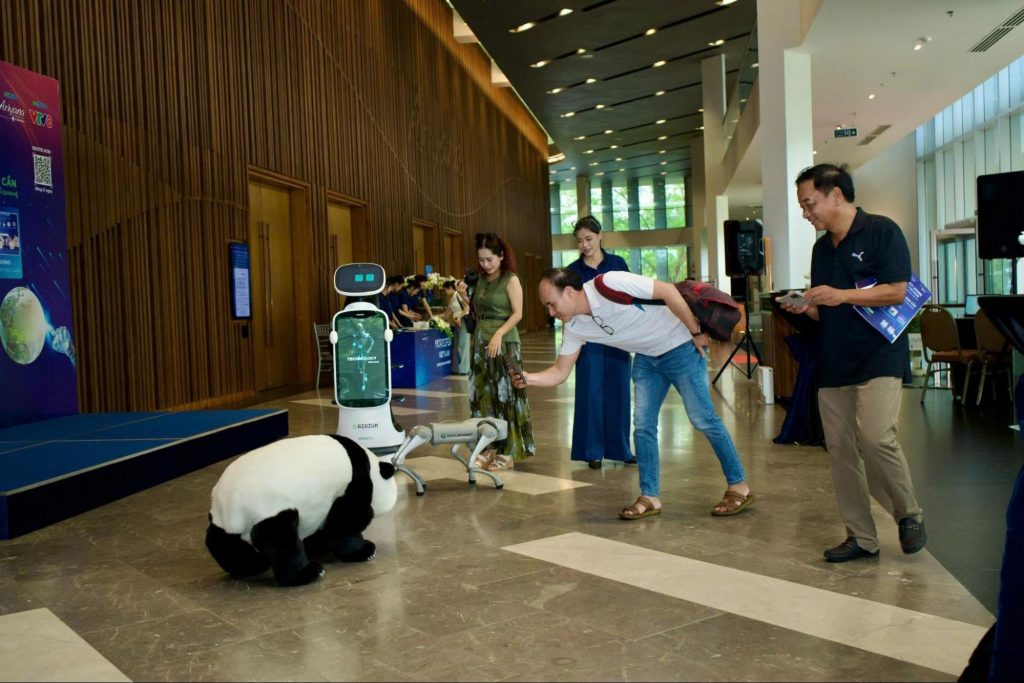
Robots at HORECFEX VIETNAM 2026 are placed in scenarios close to real operations, from reception and guidance to service support, where the value of technology is seen through its ability to solve specific tasks.
Good Technology Does Not Necessarily Need to Capture Guests’ Attention
This point is particularly important in hospitality.
A restaurant employee may need to move constantly between the kitchen and dining tables. Front desk staff repeat many of the same instructions every day. Security teams need to regularly monitor large areas. These are all necessary tasks, but not all of them require the same level of human judgment and interaction.
A robot may transport food, but recognizing that a guest is disappointed still requires a person.
AI may retrieve information quickly, but deciding which exception should be made for a guest still requires someone to take responsibility.
Smart glasses may help translate a sentence, but delivering that sentence with the appropriate level of nuance remains the employee’s role.
This is also the spirit behind HORECFEX’s technology direction: the focus is not on removing people from the service process, but on letting technology take on more of the tasks it is suited for, while people spend more time on interactions that require emotion, judgment and responsibility.
For an industry built on hospitality, this may be a more practical measure of the value of technology.
What Is Worth Looking Forward to Is Not a Single Device
HORECFEX VIETNAM 2026 takes place on August 20–21 at Ariyana Convention Centre Danang, bringing Knowledge, Technology, Supply and Connection together once again in a shared space for the hospitality and tourism industry.
But the technology appeal of this edition perhaps should not be found in which device is the most expensive, which robot is the newest or which performance is the largest.
What is more interesting is how very different technologies are beginning to converge around the same question: how can a hotel, restaurant or event create a better experience while keeping people at the center?
Mapping turns architecture into content.
Smart glasses bring data into the user’s field of vision.
VR brings a distant space directly in front of the viewer.
Robots bring artificial intelligence into the physical world.
AI is moving from answering questions to supporting more complex sequences of tasks.
Each technology follows its own direction, but when placed alongside one another, they show that hospitality is entering a stage where technology is increasingly less of a standalone system operating in the background and increasingly more present throughout the guest experience itself.
That is also what makes the technology performance at HORECFEX VIETNAM 2026 worth looking forward to.
Not simply to see what new technology can do, but to imagine more clearly: when these technologies truly enter a hotel, restaurant or resort, how will the experience change?
o0o
𝐀𝐫𝐢𝐲𝐚𝐧𝐚 𝐂𝐨𝐧𝐯𝐞𝐧𝐭𝐢𝐨𝐧 𝐂𝐞𝐧𝐭𝐫𝐞 𝐃𝐚𝐧𝐚𝐧𝐠 – Vietnam’s Leading Events Destination
Zalo: https://bit.ly/Ariyana_Zalo_Official_Account
𝐀: 107 Vo Nguyen Giap, Ngu Hanh Son Ward, Danang.
𝐓: (+84)236 651 8888
𝐄: events@ariyanacentre.com
𝐖: www.ariyanacentre.com
#AriyanaConventionCentre #Ariyana #MICE #Ariyanadanang #Ariyana #enjoydanang #MICE #MICEExpo #virtualtour #360ACC #360tour #OnetouchtoAriyana #workinganniversary#bestplacetowork