
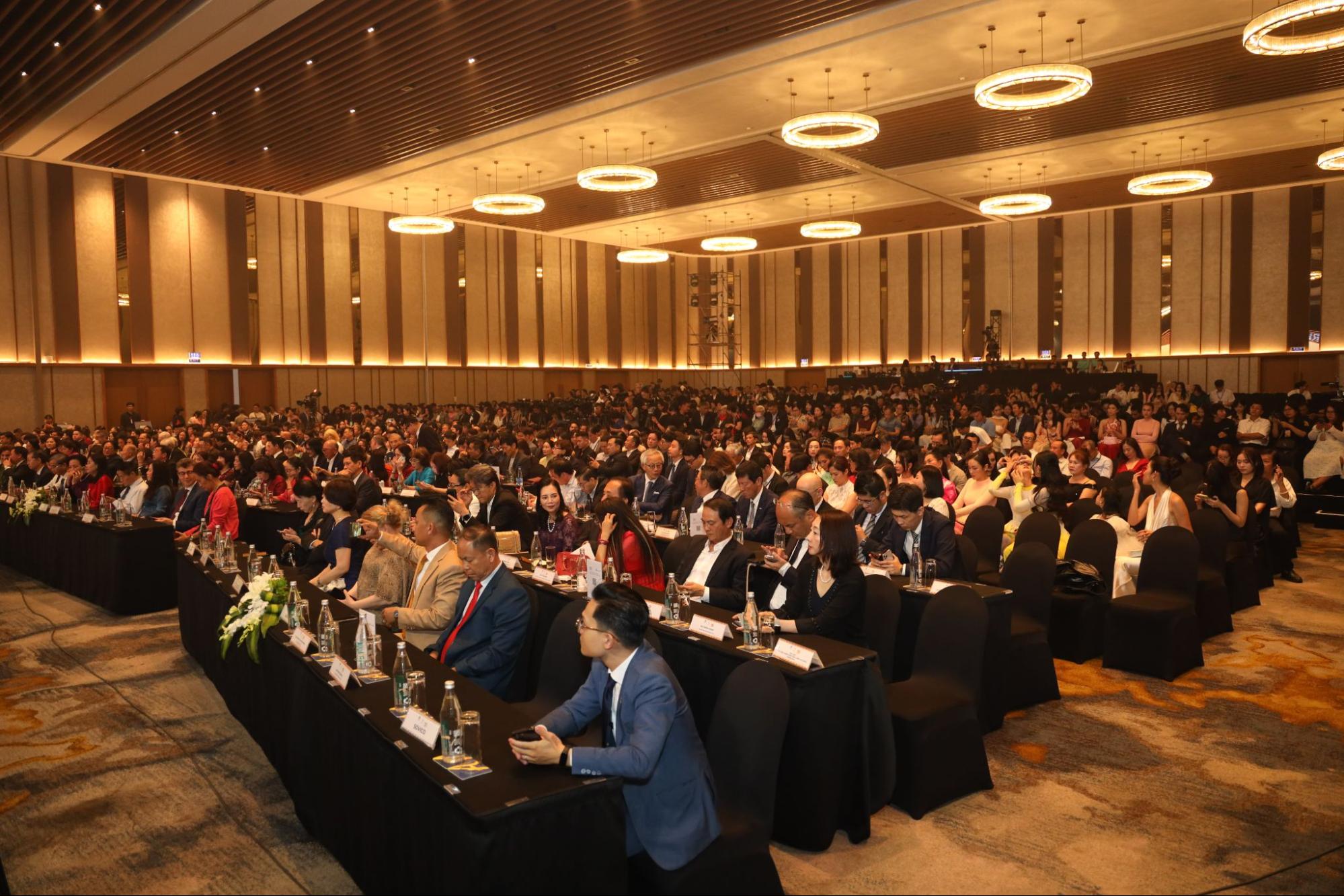
A hotel ends the month with an 80% occupancy rate. That may seem like a satisfying figure. But if competing hotels in the same segment are achieving 88%, the picture immediately changes. In a fast-growing tourism market like Vietnam, the question for businesses is no longer simply “Are we growing?”, but rather “Are we growing faster or slower than the market?”. This is also where data from STR | CoStar Group can help hotel professionals gain a clearer view at HORECFEX VIETNAM 2026.
Vietnam entered 2026 with a notable tourism demand base. In just the first seven months of the year, the country welcomed approximately 13.9 million international arrivals, up 13.8% year-on-year, equivalent to more than half of the annual target of 25 million international visitors. July alone recorded approximately 1.67 million international arrivals.
From the demand side, this is a positive signal.
But the hotel market is not determined by demand alone. The other side of the equation is the number of rooms already in operation and the number of rooms preparing to enter the market. According to the Vietnam National Authority of Tourism, by the end of March 2026, the country had more than 801,000 accommodation rooms, including 299 five-star hotels.
New development plans continue to be announced. In July 2026, Accor and Sun Group signed an agreement expected to add another 5,300 hotel rooms to Accor’s portfolio in Vietnam, with some of the first projects located in Danang and Phu Quoc. CoStar stated that Vietnam is now Accor’s third-largest market in Asia by number of hotels.
Demand is rising. Investment is continuing.
And it is precisely in the space between these two movements that seemingly strong figures for visitor arrivals or occupancy rates begin to require a closer reading.
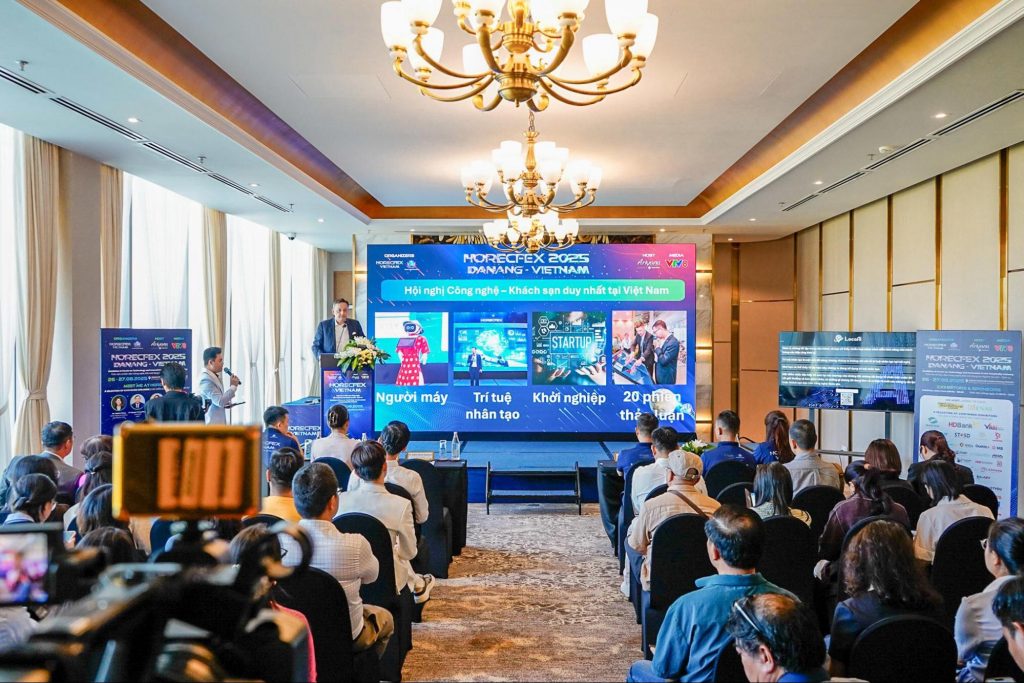
HORECFEX brings market data, expert perspectives and real-world operational challenges into one space dedicated to the Hospitality & Tourism community.
Is 80% Occupancy Really a Good Result?
In hotel operations, occupancy is often one of the first figures to be looked at.
But 80% on its own does not tell us very much.
Suppose a hotel achieves 80% occupancy in a given month. If its competitive set achieves only 70%, the hotel is capturing a stronger share of market demand. Conversely, if the competitive set reaches 88%, the same 80% figure shows that the hotel is capturing less demand than the properties around it.
Room rates work in much the same way.
A 10% year-on-year increase in ADR – average daily rate – may sound positive. But if the competitive set has increased by 15%, the hotel may still be losing its pricing advantage. RevPAR – revenue per available room – may increase in absolute terms while the hotel’s relative market position is actually weakening.
This is why benchmarking has become an important part of hotel data.
STR does not simply look at a hotel’s Occupancy, ADR or RevPAR. Indicators such as MPI compare occupancy, ARI compares ADR, and RGI compares RevPAR against a competitive set or the broader market. Within this system, a score of 100 represents “fair share”; above 100 indicates that a hotel is achieving a higher share than its comparison group, while below 100 indicates the opposite.
This seemingly technical distinction actually leads to a very important business question:
Is the hotel growing because the business itself is performing better, or simply because the entire market is moving upward?
A Growing Market Does Not Mean Every Hotel Benefits Equally
This is also one of the points HORECFEX raises when presenting this year’s market data session: a growing market does not mean every hotel within that market benefits equally. Occupancy, ADR and RevPAR only become truly useful when businesses understand the story behind the numbers.
This becomes even more noteworthy when looking back at the data presented by STR at HORECFEX in 2025.
In Danang, occupancy was recorded at around 60–70%, above the average for the 2013–2019 period; ADR during the peak season ranged from approximately USD 120–140. The data also showed that occupancy was increasing faster than room rates, reflecting strong accommodation demand while new supply had not yet expanded too rapidly at that time.
One year later, the important question is no longer simply how far the market has recovered.
If visitor arrivals continue to grow while new supply is also added, businesses need to look more deeply into the rate of demand growth versus the rate of room supply growth, the absorption capacity of each segment, and the pricing power of each market.
A resort may sell more rooms but have to lower rates to achieve occupancy.
Another hotel may deliberately maintain lower occupancy while achieving significantly higher room rates.
A new project may enter the market at exactly the right time, when demand is growing strongly. But that same project, if it opens when thousands of other rooms are entering the market simultaneously, will face an entirely different challenge.
Therefore, “the market is doing well” is not enough information to make an investment decision.
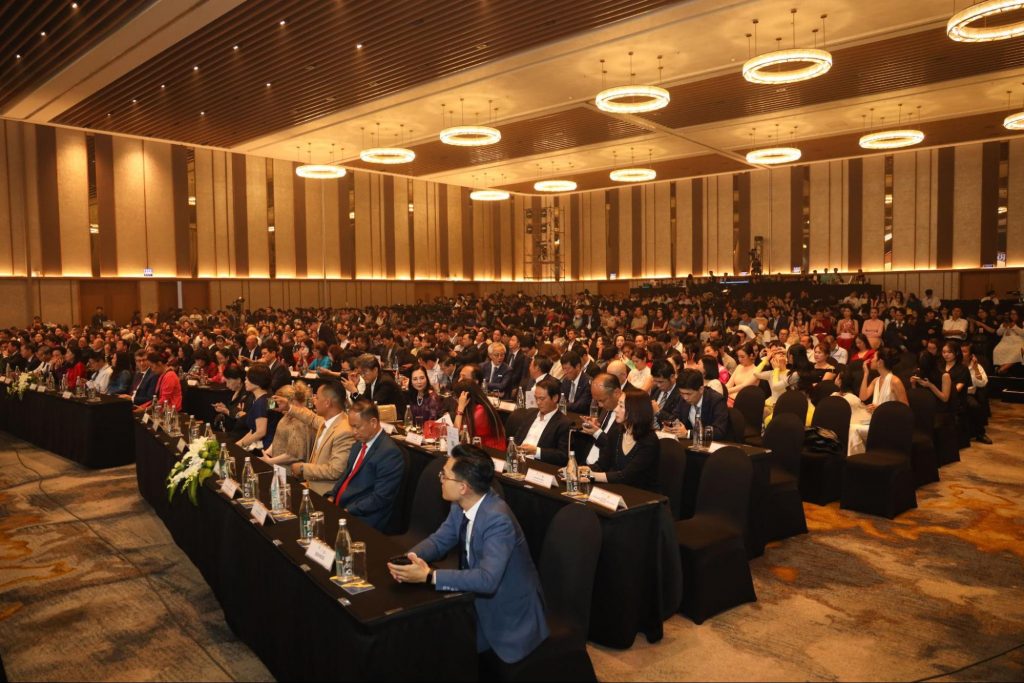
At Ariyana Convention Centre Danang, major market questions are not only raised but also become topics of direct dialogue among businesses, experts and the Hospitality & Tourism community.
From Asking “Is the Market Growing?” to “Where Is the Growth Coming From?”
This is what makes the participation of Ms. Oxy Ong, STR | CoStar Group’s representative responsible for South Asia and Southeast Asia, at HORECFEX VIETNAM 2026 particularly noteworthy.
Her session is built around the theme “Vietnam’s Hotel Market: Growth, Gaps, and What’s Next” – Vietnam’s Hotel Market: Growth, Gaps, and the Next Steps. According to HORECFEX, the session will not only examine the performance of Vietnam’s hotel industry but also explore new opportunities, structural challenges, the outlook for urban and resort markets, while placing Vietnam in comparison with other destinations across Southeast Asia.
Placing Vietnam alongside the region is particularly meaningful.
An ADR of USD 150 cannot be considered high or low without context on the product, market and competitive landscape. A destination growing by 10% also carries a different meaning if competing destinations are growing by only 3%, or conversely, by 20%.
Benchmarking therefore takes businesses out of their own “rear-view mirror”.
Instead of asking only how much revenue has increased compared with last year, hotels can ask more challenging questions: Are we gaining market share; are competitors increasing their rates faster or slower; where is there still untapped demand during the week; which segments are generating demand; and is our growth genuinely outperforming the market?
STR has a sufficiently large data scale to conduct these comparisons. According to CoStar Group, STR currently aggregates data from approximately 94,000 hotels, representing 12 million rooms across more than 190 countries, supporting benchmarking and analysis for hotel brands, operators, owners and investors.
But big data is not the end value.
The value lies in the decisions made after reading the data.
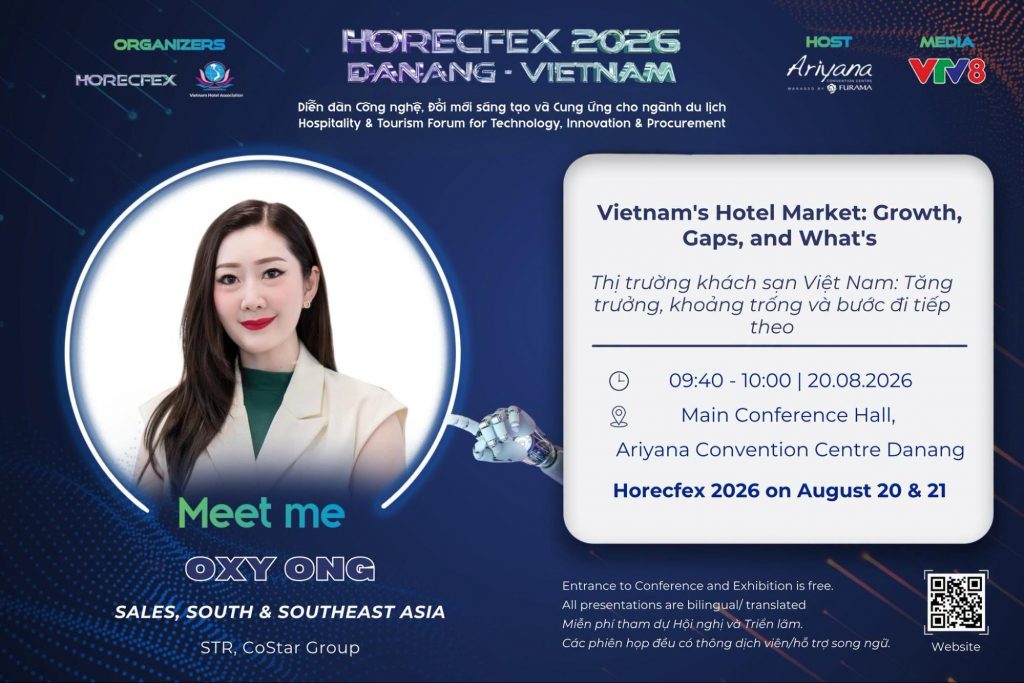
Ms. Oxy Ong, STR | CoStar Group, will bring to HORECFEX VIETNAM 2026 perspectives on the growth, gaps and next movements of Vietnam’s hotel market.
Raise Rates, Maintain Occupancy or Invest Further?
For a revenue manager, market signals may lead to a decision to adjust pricing.
For a general manager, they may influence how group, leisure or business travelers are allocated.
For an owner, the data may affect decisions on renovation, expansion or product repositioning.
For an investor considering a new project, the question is much bigger: what should be built, where and when?
HORECFEX places these questions at the heart of this year’s STR session: which locations are suitable for new projects, which segments still have potential, what price levels accurately reflect demand, how new supply could affect the market, and how guest behavior is changing.
This is also when figures such as international arrivals or new room supply begin to carry real meaning.
The 13.9 million international arrivals recorded in the first seven months of the year signal the strength of demand. More than 801,000 accommodation rooms indicate the scale of existing supply. A single agreement adding 5,300 rooms for an international group, meanwhile, signals that investment confidence remains present. But none of these figures, standing alone, can answer whether a specific project should be built or whether a particular hotel should raise its rates.
The decision only becomes clearer when these data points are considered together.
Vietnam Is Moving Toward a Different Question of Growth
After years in which the story of Vietnam’s tourism industry was closely tied to the recovery of visitor numbers, 2026 is beginning to reveal a different context.
In January 2026, Vietnam recorded nearly 2.5 million international arrivals in a single month for the first time, the highest figure recorded at the time of announcement. By the end of June, the number had reached 12.3 million, up 14.9%; after seven months, it stood at 13.9 million.
As a result, the question “Have visitors returned?” is becoming less valuable.
The questions behind it are harder to answer: which source markets are driving growth; which destinations are receiving the greatest benefits; what room remains for luxury, upper upscale and other segments; how quickly will new supply be absorbed; and which businesses are growing faster than the market itself?
This is also the gap between tourism growth and hotel business performance.
A destination may welcome millions of additional visitors, but not every hotel will have the same guest mix, pricing, distribution channels or products to benefit equally.
Therefore, what businesses need is not simply more data on market size. More importantly, they need the ability to know which data is relevant to the decision they are about to make.
HORECFEX: Before Asking Which Technology to Invest In, Know Which Problem You Are Solving
This creates a clear connection between STR and the structure of HORECFEX VIETNAM.
At an event where businesses can access robots, artificial intelligence, management systems, presentation technologies, operational solutions and many new product categories, it is easy to begin with the question: “Which technology is worth investing in?”
But perhaps the question that should come first is:
“What problem does the business need to solve?”
A hotel losing its pricing advantage needs a different decision from a hotel struggling with occupancy. A market where demand is growing rapidly but supply is limited creates a different investment context from a market preparing to receive thousands of new rooms. A resort seeking to develop MICE also needs to read different signals from a city hotel dependent on business travelers.

Direct conversations at HORECFEX help businesses place technology within the right operational context – starting by identifying the problem to be solved before choosing the solution to invest in.
From this perspective, STR data becomes a clear part of the Knowledge pillar at HORECFEX.
Knowledge does not stand separately from Technology or Supply. It helps businesses understand where they stand before deciding what to purchase, where to invest or which direction to take.
HORECFEX can place a new solution in front of a hotel operator. But market data enables that operator to ask the more important question in return: is this solution suitable for the business’s current position and the direction in which the market is moving?
That is also why a data session can be just as valuable as a technology showcase.
The Hotel with the Most Data Will Not Necessarily Win
The hotel industry has never lacked numbers.
Occupancy, room rates, RevPAR, revenue, booking pace, length of stay, source markets, distribution costs, forecasts… every day, a hotel can generate an enormous amount of data.
The harder task is knowing which numbers are actually sending a signal.
Higher occupancy can be a positive result, but it may also come from discounting too deeply. A high ADR may indicate pricing power, but it may also come with a loss of demand. Rising RevPAR may be encouraging, but if competitors are growing faster, the hotel is still gradually losing its position.
Therefore, the advantage does not necessarily belong to the business with the most data.
It may belong to the business that understands its position in the market earlier, recognizes what is changing, and makes decisions before those changes become obvious to everyone else.
That is also the question worth anticipating from STR’s perspective at HORECFEX VIETNAM 2026.
Not simply how much Vietnam’s hotel industry is growing.
But where the growth is coming from, who is truly benefiting – and what the next step should be based on which signals.
o0o
𝐀𝐫𝐢𝐲𝐚𝐧𝐚 𝐂𝐨𝐧𝐯𝐞𝐧𝐭𝐢𝐨𝐧 𝐂𝐞𝐧𝐭𝐫𝐞 𝐃𝐚𝐧𝐚𝐧𝐠 – Vietnam’s Leading Events Destination
Zalo: https://bit.ly/Ariyana_Zalo_Official_Account
𝐀: 107 Vo Nguyen Giap, Ngu Hanh Son Ward, Danang.
𝐓: (+84)236 651 8888
𝐄: events@ariyanacentre.com
𝐖: www.ariyanacentre.com
#AriyanaConventionCentre #Ariyana #MICE #Ariyanadanang #Ariyana #enjoydanang #MICE #MICEExpo #virtualtour #360ACC #360tour #OnetouchtoAriyana #workinganniversary #bestplacetowork