
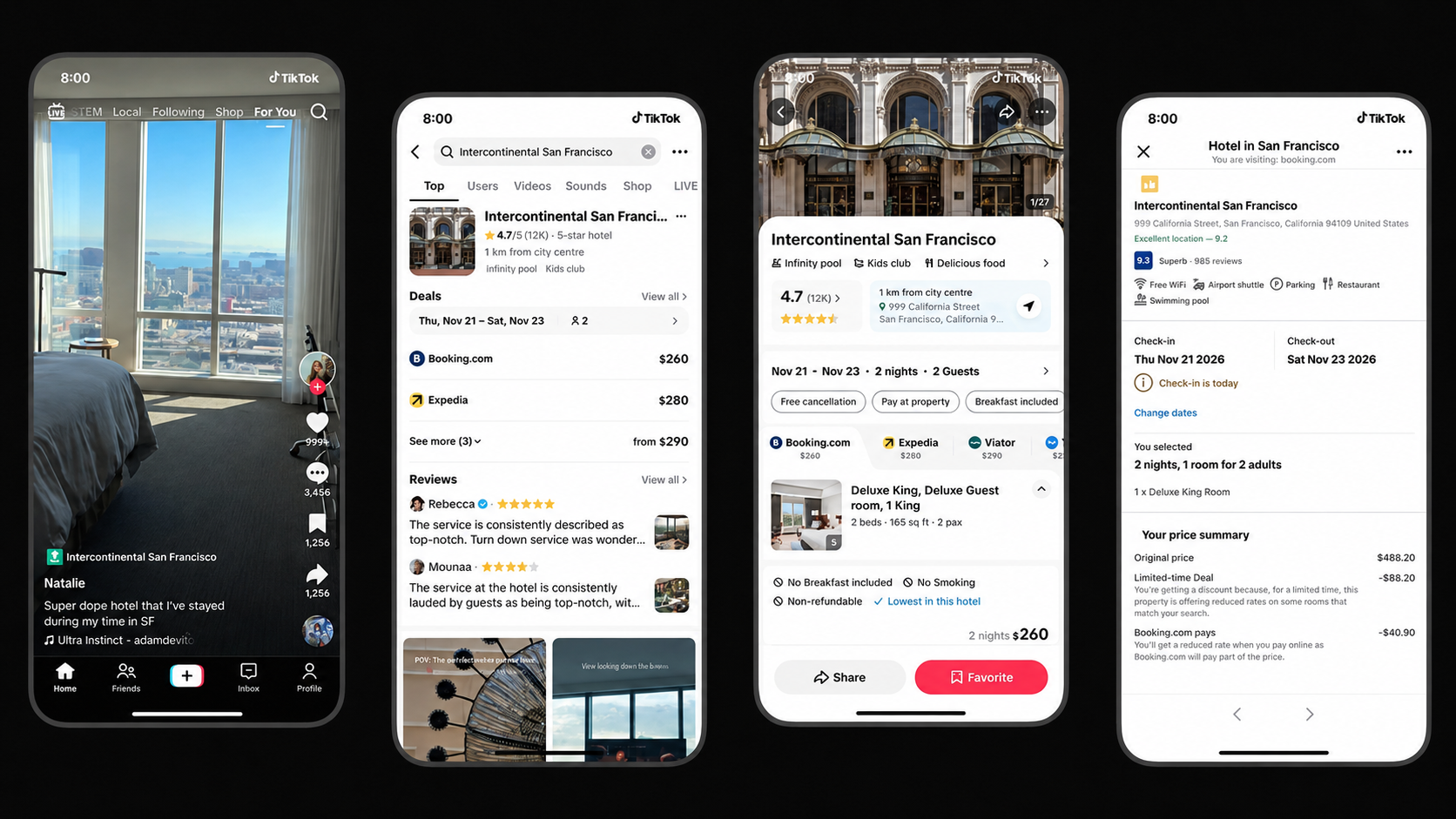
Before a hotel appears in a search result, a traveler may have already watched dozens of videos, saved several places and formed initial preferences that businesses can hardly see. As TikTok continues to shorten the distance between discovery and booking, Google is bringing artificial intelligence deeper into the process of search and trip planning. The participation of representatives from both platforms at HORECFEX VIETNAM 2026 therefore raises a question that is highly relevant to the hospitality and tourism industry: how will businesses find customers as the way travelers search for a trip continues to change?
One evening, a user pauses at a video featuring a seaside restaurant. They have no plans to visit Da Nang and are not actively searching for a resort. The location is saved and quickly sinks among countless other pieces of content.
A few days later, the name that once appeared on the screen is typed into Google. From the restaurant, the user searches for hotels in the area, opens the map, reads reviews, checks flight prices and begins comparing different options.
By the time an actual hotel booking is made, it is difficult to determine whether the decision began with the first video, the search that followed or a review read at the final stage.
This is an increasingly difficult-to-see part of the customer acquisition journey in hospitality. Businesses may know where a transaction was completed, but they do not always know what first sparked the guest’s interest, which sources of information they went through, or which brands were considered alongside other options before the decision was made.
TikTok is increasingly becoming an early touchpoint in the travel journey, where a video can spark attention even before users begin searching and planning their trip. (Source: Internet)
This very gap makes the presence of Google and TikTok at HORECFEX VIETNAM 2026 more noteworthy than simply a story about two major technology names.
Travel demand can form before a search even begins
In the conventional approach, businesses tend to target people who already have a need. Someone searching for “Da Nang resort”, “hotel near the beach” or “3-day Da Nang trip” is a relatively easy customer to identify: they already know what they want and are beginning to choose among different options.
Today, content platforms are pushing competition to an earlier stage in the customer decision-making journey.
A hotel can appear in front of a user when that person has no intention of looking for a hotel. A restaurant, a beach, a festival or a local experience can draw attention to a destination before travel demand has actually formed.
For the tourism industry, this is particularly significant. Unlike many goods purchased to address an existing need, travel demand is often sparked by what people see and hear. A holiday may begin with the question “Where should I go?”, but it can also begin with an image compelling enough to make someone think about taking a trip.
TikTok is moving deeper into the space between these two stages. In May 2026, the platform introduced TikTok GO in the United States, allowing users to move from content and location pages to viewing information, checking availability and booking hotels, attractions or tours through partners such as Booking.com, Expedia and Trip.com.
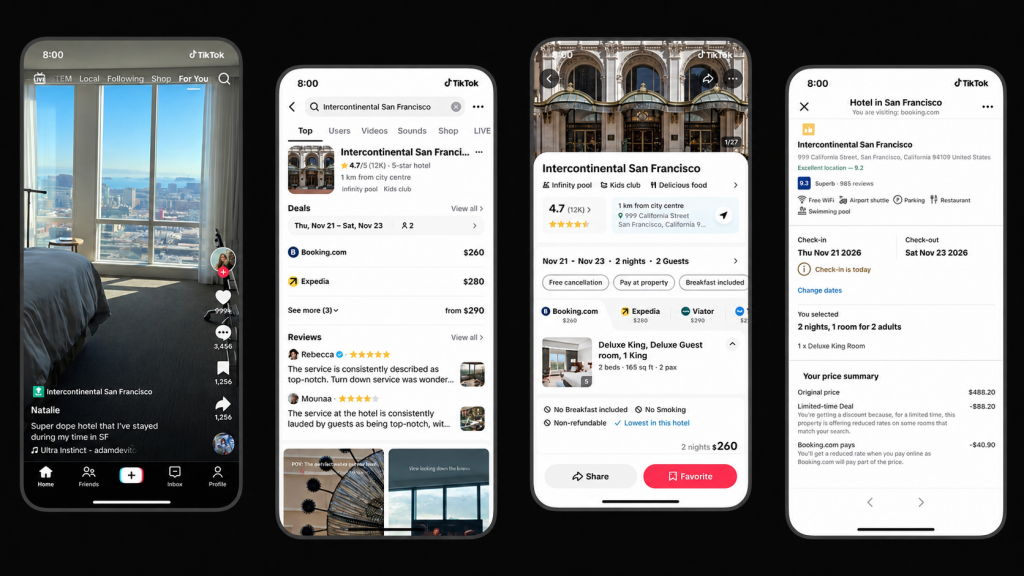
TikTok GO shows how the gap between discovery and transaction is narrowing, as users can move from travel content to hotel information, availability and the booking stage directly on the platform. (Source: Internet)
TikTok GO is not yet a model deployed in Vietnam, but this direction of development points to a clear trend: the boundaries between consuming travel content, developing a desire to travel and completing a transaction are becoming increasingly blurred.
For hospitality professionals, this changes how social media should be viewed. If content platforms were previously seen primarily as places to build awareness, their role today can emerge earlier in the process of demand formation and move closer to the point at which guests begin considering a purchase.
The question, therefore, is no longer simply how many views a piece of content receives. More importantly, what kind of demand does that content create, for which customer groups, and does the business have the ability to sustain that interest through the next stages?
Google and a changing way of searching for a trip
After the discovery stage comes another process: guests begin actively researching. But even search itself is no longer happening the way it used to.
Instead of simply entering a few short keywords and opening individual results to compare them, users can increasingly make more specific requests based on budget, timing, preferences, types of experiences or trip conditions. The involvement of artificial intelligence is making search and planning feel more like a conversation than a simple list of results.
Google reported that in 2026, search interest in terms related to “AI travel assistant” and “AI concierge” increased by 350% compared with the previous year. Alongside this are tools that help users build itineraries, find flights, compare hotels and move progressively from research to booking.
Google is bringing AI deeper into the trip-planning process, allowing users to combine information about flights, hotels, destinations and itineraries within a single search experience. (Source: Internet)
This shift places a different requirement on hotels.
Appearing high in search results is no longer enough for a hotel to become a traveler’s choice. Guests also look at rates, room types, location, amenities, reviews from previous guests, information on websites and maps before deciding whether to continue considering a property. As more sources of information become available, hotels need to ensure that their product images, content and information are presented clearly, consistently and convincingly.
A business may spend heavily on advertising but still be at a disadvantage if product information is unclear, imagery is inconsistent, reviews are poorly managed or the booking process is difficult. Technology therefore does not diminish the importance of fundamental principles in hotel business. On the contrary, as guests have more tools to research and compare, weaknesses in the product and in the way businesses provide information become even easier to see.
A trip no longer begins with a single search
Against this backdrop, the participation of Ms. Biên Hoàng, Growth Manager at Google, and Mr. Nguyễn Lâm Thanh, Managing Director of TikTok Vietnam, at HORECFEX VIETNAM 2026 offers two different perspectives on how a travel decision is formed.
TikTok shows how a destination can enter a user’s attention even when they have no plans to travel anywhere. A video about a hotel, a dish or a local experience can create curiosity, prompting viewers to save a location and begin thinking about a trip that had not previously been part of their plans.
Google becomes more prominent when curiosity turns into a need for information. Users begin asking more specific questions about destinations, room rates, transportation, reviews or how well a product fits their individual needs.
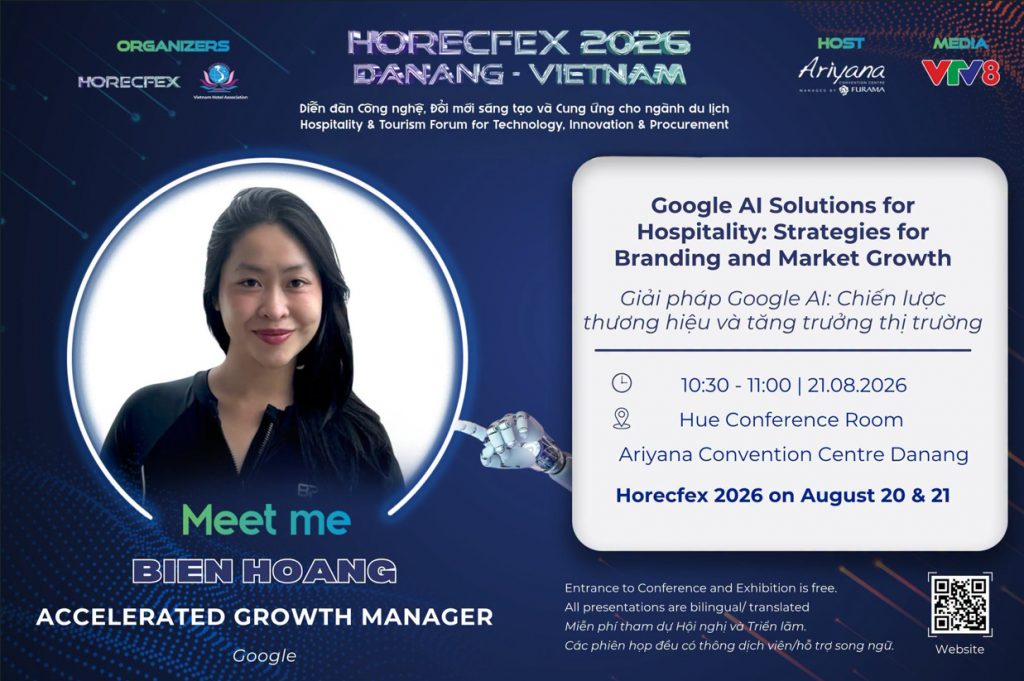
Ms. Biên Hoàng, Growth Manager at Google, will join HORECFEX VIETNAM 2026 to share perspectives on how artificial intelligence supports the hospitality and tourism industry in reaching customers, building brands and driving growth.
However, this process rarely follows a fixed sequence. Users may watch a video, search, return to social media to explore other people’s experiences, continue reading reviews, check prices and then look for more information before making a decision. Some complete this process within a few hours, while others may take several days or weeks.
Therefore, the issue for hotels is not whether to choose Google or TikTok. What matters is understanding when customers use each platform, what they use it for, and whether the business appears convincingly enough throughout that journey.
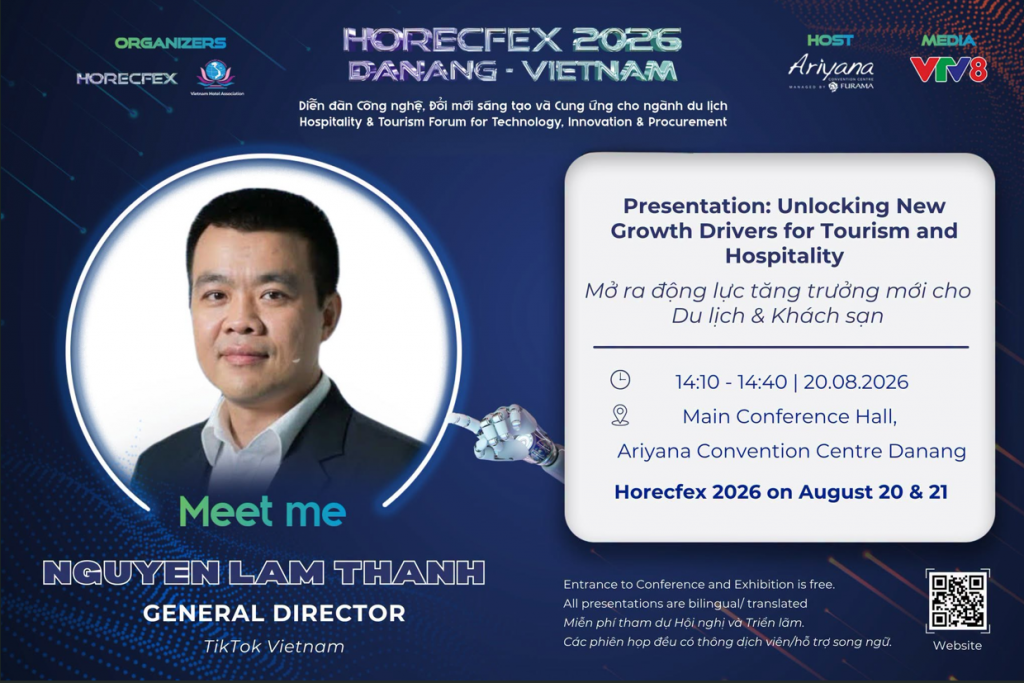
Mr. Nguyễn Lâm Thanh, Managing Director of TikTok Vietnam, will join HORECFEX VIETNAM 2026 with perspectives on new growth drivers for the hospitality and tourism industry, as travelers’ behaviors in discovering, searching for and choosing services continue to change rapidly.
This is also what makes the participation of the two representatives at HORECFEX VIETNAM noteworthy. The discussion is not only about a platform or a media trend, but touches on a broader industry issue: how travel demand is formed and how businesses can reach that demand before a booking appears.
The gap between attention and revenue
Understanding how guests discover and search is only the first step. For hospitality businesses, the harder part lies in turning that interest into business results.
A piece of content that spreads widely can make thousands of people aware of a resort or destination. Search volume may then increase as well. But when guests move into the comparison stage, they may still choose another property because the price is more suitable, the reviews are better, the information is clearer or the booking process is more convenient.
This shows that digital attention does not automatically translate into revenue. A brand may help generate demand for an entire destination without necessarily being the ultimate beneficiary of that demand.
This is also why looking only at the channel that generates the final transaction does not fully reflect the decision-making process. A booking made through Google may have started with a video watched on TikTok weeks earlier; a visitor who goes directly to a website may have already read reviews, viewed content from previous guests and compared several other options before searching for the brand.
The two perspectives brought to HORECFEX therefore have value precisely in this middle ground. Hospitality professionals need to know not only where guests see them, but also understand what happens afterwards and why some people continue toward a booking while others move on to another option.
If TikTok helps the industry better understand how interest can be sparked, while Google shows how demand is expressed through active search, the next question for businesses is how to connect these two stages into an effective business process.
Finding customers is no longer solely a marketing function
This question also explains why changes on Google or TikTok are not relevant only to communications teams.
Marketing can make a customer interested in a product, but the purchase decision depends on many other factors. A resort that attracts family travelers may struggle to convert interest into bookings if information about children, accommodation policies or family room types is unclear. A restaurant that is frequently mentioned on social media can still lose customers if making a reservation is inconvenient. A hotel with rising search volume may not necessarily sell more rooms directly if its website rates are less competitive than those offered through intermediary channels.
For international guests, the gap may also lie in language, payment methods, the way information is presented or the specific needs of individual markets.
Therefore, finding customers today is directly connected to product, revenue management, sales, distribution and operations. Communications can spark initial interest, but the rest of the business determines whether that interest moves forward into a transaction.
This is also why the Google–TikTok story fits HORECFEX VIETNAM, where technology professionals do not stand separately from communications specialists, but are present alongside investors, operators, suppliers and the communities directly doing business in the hospitality and tourism industry.
The value of the discussion therefore does not lie in introducing another platform or new tool. More importantly, changes in customers’ digital behavior are placed in the right operational context: if customers are discovering differently, searching differently and making decisions differently, what do hotels need to adjust in the way they approach the market, sell their products and organize the guest experience?
This is also how HORECFEX brings an issue that may seem to belong to digital communications back to the core business challenge of the industry: finding the right customers, retaining their interest and turning demand into tangible business results.
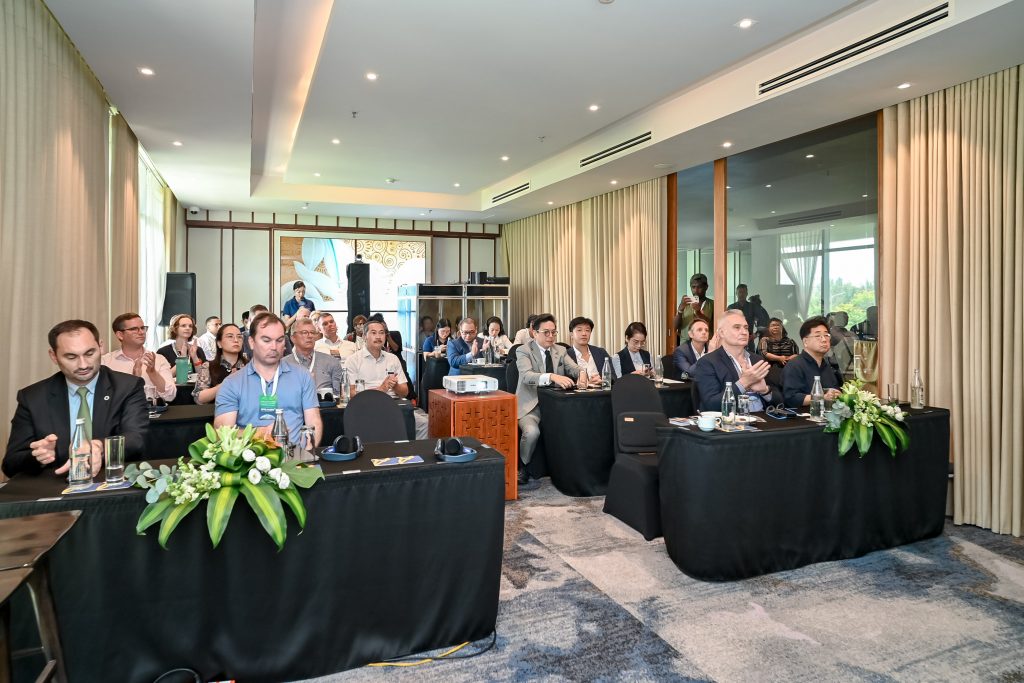
HORECFEX VIETNAM creates a space for investors, operators, suppliers and communities directly engaged in the hospitality and tourism industry to exchange perspectives on market changes and practical challenges in operations, business and customer acquisition.
HORECFEX brings the technology conversation back to business challenges
HORECFEX VIETNAM 2026 takes place on August 20–21 at Ariyana Convention Centre Danang, bringing together the hospitality and tourism community, technology businesses, suppliers and experts from Vietnam and around the world. This year’s program continues to revolve around four pillars: Knowledge, Technology, Supply and Connection.
At an event featuring artificial intelligence, robots, management solutions and various technologies supporting operations, the participation of Google and TikTok adds another dimension to the digital transformation story.
That is what happens before guests enter the hotel.
Businesses may invest in modern management systems, automate processes or apply AI in guest services. But before these technologies have a chance to create value, customers must know about the business, learn about it and decide to choose it.
The presence of Google and TikTok at HORECFEX therefore expands the discussion from the question of “how hotels operate with technology” to an issue more closely connected to growth: how technology is changing the way travel demand is formed and how businesses reach that demand..
This is also the value that HORECFEX can create for attendees. People who can observe user behavior at scale are brought into the same space as those directly selling rooms, operating hotels, developing products and serving guests.
As a result, the discussion does not have to stop at what new feature a platform has just launched. Industry professionals can ask more specific questions about their own businesses: what products are customers searching for, what triggers new demand, how can interest on social media be connected with sales, and which metrics should businesses use to measure marketing effectiveness without simply chasing views.
From this perspective, Knowledge at HORECFEX means gaining a clearer understanding of market changes; Technology is the tool that helps businesses reach and respond to those changes; while Connection creates opportunities for people facing real business challenges to meet those who possess the data, technology and experience needed to help solve them.
That is also when a technology forum goes beyond simply introducing trends.
Understand the guest before selling the room
The hotel industry has spent many years understanding guests after they arrive: which room types they choose, which services they use, which foods they prefer, what they are satisfied with and how likely they are to return.
The harder part today lies in the period before that.
Where did guests first discover the business? What made them start searching? Which options were considered side by side? What information kept them engaged, and what made them switch to another brand?
A booking only tells a business who purchased. Those who viewed, searched and considered but ultimately chose somewhere else are much harder to see.
The participation of Google and TikTok at HORECFEX VIETNAM 2026 is therefore noteworthy precisely because of this missing part. Two different perspectives help hospitality professionals better understand what happens before the transaction — where demand is sparked, information is searched for and the shortlist of options gradually takes shape.
For an industry where every piece of revenue begins with a customer decision, understanding this process is increasingly becoming an important part of business capability.
A hotel may create the best experience once a guest walks through the door. But first, the business must understand why that guest decided to walk through it.
o0o
𝐀𝐫𝐢𝐲𝐚𝐧𝐚 𝐂𝐨𝐧𝐯𝐞𝐧𝐭𝐢𝐨𝐧 𝐂𝐞𝐧𝐭𝐫𝐞 𝐃𝐚𝐧𝐚𝐧𝐠 – Vietnam’s Leading Events Destination
Zalo: https://bit.ly/Ariyana_Zalo_Official_Account
𝐀: 107 Vo Nguyen Giap, Ngu Hanh Son Ward, Danang.
𝐓: (+84)236 651 8888
𝐄: events@ariyanacentre.com
𝐖: www.ariyanacentre.com
#AriyanaConventionCentre #Ariyana #MICE #Ariyanadanang #Ariyana #enjoydanang #MICE #MICEExpo #virtualtour #360ACC #360tour #OnetouchtoAriyana #workinganniversary#bestplacetowork